Stories

June 24, 2023

SHARE:

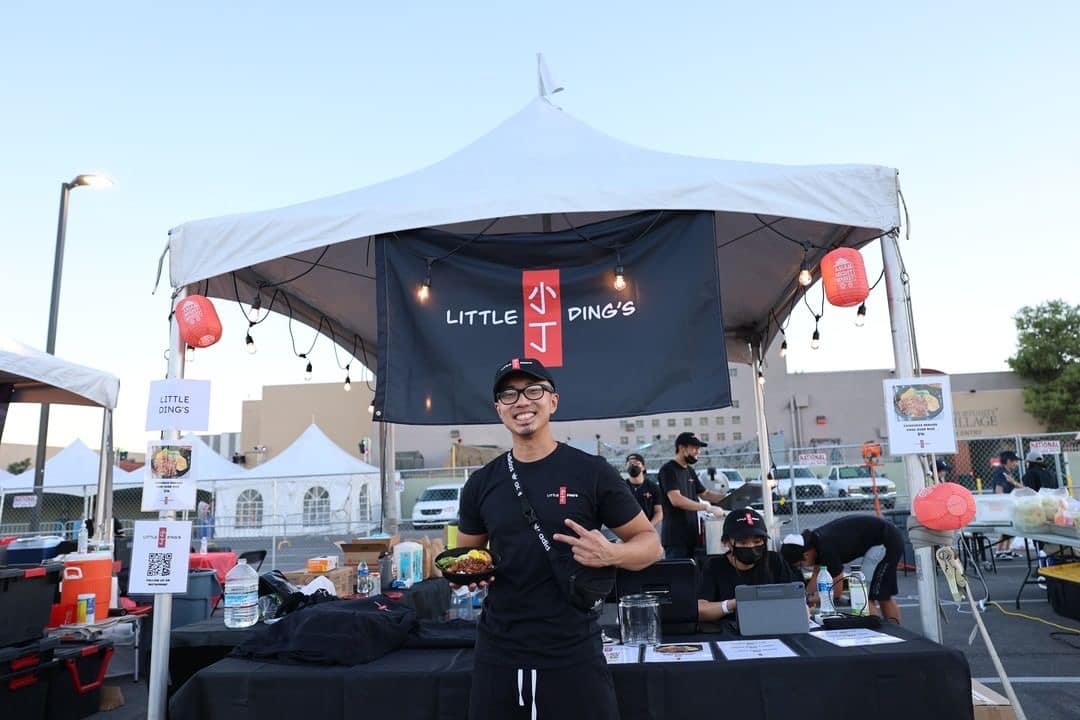
A successful engineer by day and an entrepreneur by night, that’s what Derek Ting is.

Derek followed his passion for entrepreneurship and launched FREESTYLE a few years back, a brand with the purpose to help and inspire individuals out there to pursue their own path in life through sharing stories, empowering messages, bold designs, and building a community. But he didn’t stop there.

Without a professional experience in the kitchen or background in culinary, but with a dream of sharing Taiwanese cuisine with more people in the world, he brought Little Ding’s to life.

In an interview with Asian Hustle Network, Derek shared insights into his entrepreneurial journey. Join us as we delve into Derek Ting’s remarkable story, uncovering the secrets to his success and the invaluable lessons he has learned along the way.

DEREK’S JOURNEY BOTH AS AN ENGINEER AND ENTREPRENEUR

I graduated back in 2019 with an engineering degree while working to launch my first real brand/business, FREESTYLE, but I wasn’t always into business or entrepreneurship. Before 2015, I thought that being an engineer was “IT” for me. I thought engineering was everything I wanted and everything I would be doing for the rest of my life so I didn’t even think of any other possibility. 

In 2015 I took on my first internship/Co-op after freshman year at IBM/Globalfoundries which was honestly a dream come true for me (I mean what freshman wouldn’t be excited about an opportunity like that?). Little did I know, that experience would change everything for me but in the complete opposite way I thought it would.

Seeing the energy of the people who were there for 20-30 years made me realize I needed to do something else, something different. That was when I read my first book, started taking stocks more seriously, and started trying out a whole bunch of different ventures/ideas/things. And for those of you who don’t know what you want to do yet, it’s okay to not know, but you won’t know unless you go out and try a whole bunch of different things!

Nothing stuck with me until later in college, which was FREESTYLE, but even then I wasn’t anywhere near launch by the time I graduated so I stuck out engineering as a way to support myself while I go on this journey to figure “business” out.

FREESTYLE didn’t take off how I wanted it to and I slowly learned that business in general and then each industry had their own “game” to play but I knew how important it was for me to continue to go through the growing pains. Experience compounds and business principles transfer over to new ventures so it was important I kept going despite not finding “success” so I could keep learning. I don’t believe that I’d be able to do what I’m doing with Little Ding’s today and at the speed we’re going at if I didn’t keep building FREESTYLE.

It’s been 5 years since I started building an actual brand/business and 7 since I started learning about entrepreneurship and I’m only getting started!

Little Ding’s has been something I’ve wanted to build for a long time and the accumulation of all of my past experiences, knowledge, and network is moving us forward and getting us opportunities at a speed that I couldn’t have predicted. It’s been really cool and super mind blowing but again, this is only the beginning, we haven’t even gotten started yet!

I’m blessed that I am also a full-time engineer on the side because being an engineer (specifically in data and analytics), has helped me develop and refine skills necessary in business but not stressed such as the importance of understanding numbers, metrics, and data pertaining to each aspect of the business. Is it hard to do all of the above? Yeah, my entire life at this moment is just work… but I love it.

PUSHING THE LIMITS

In the process of building FREESTYLE and Little Ding’s, I learned that limits are self-imposed.

I’m a huge dreamer, and I love challenges. The process and hardships of entrepreneurship, which are basically personal development, helped me to discover that every time I pushed myself to what I thought was my limit, I could handle more, and once I realized that the playbook was entirely up to me, I went kind of crazy (in a good way of course).

For example, I launched Little Ding’s in October of 2022. We then did ONE small event in November and ONE event in January. How were we able to handle the largest food events on the west coast, back-to-back weekends, and even introduce a new menu item? Because that’s exactly what we did when we did the Water Lantern Festival, into the first and second Foodieland, the first 626 Mini Night Market, the first We Bridge Expo in Vegas into more and more up to now, where within 8 months of even existing, we are coming for the main 626 events in SoCal!

STAYING TRUE TO THE FLAVORS OF AUTHENTIC TAIWANESE CUISINE

My goal with Little Ding’s is to bring Taiwanese food out to more of the world, and so doing that means the food I focus on has to be somewhat relatable between cuisines such as Taiwanese popcorn chicken, where almost everyone has some idea of what popcorn chicken is, but maybe not necessarily Taiwanese popcorn chicken.

When thinking about new food items to add, I’m envisioning myself taking a stroll through Taiwan’s night markets and seeing which foods are popular that I remember the taste of and would be easily accepted in the States.

When it comes to testing recipes, I gather a ton of different online recipes and lay out all of the ingredients that are being used to figure out what each ingredient adds to the recipe and then slowly test out the ratios until the taste brings me back to the streets of the night market.

I may not come from a culinary background or know a ton about ingredients but I have good taste buds and I can remember taste even if I didn’t know what made it.

The reality is that, it is a LOT of testing and as much as everyone around me enjoys the food I make and the recipes I created, I myself got a bit sick of them because I ate each item that I tested multiple times a day for weeks before I got the recipes to where I wanted them AND THEN I would continue to adjust as I got feedback from all of my guinea pigs *cough* I mean friends, in Vegas.

It’s a bit easier now because I have a team so I don’t have to eat as much of my own food over and over again but it’s still a lot of testing especially to stay true to the flavors of authentic Taiwanese cuisine.

OVERCOMING HURDLES

The more I zoom out, the smaller the stumbles become.

Derek Ting

I love challenges in general so I actively seek them out for us to take on and I think almost every event we’ve done was a challenge because every single one was unique.

But in terms of the challenges we’ve faced where things went wrong or weren’t great for us, a lot of it comes down to the long-term vision and how focused you are on it. We came out swinging when we launched Little Ding’s and crushed our first event. We thought it would be like that for other events too but we were met with two financial losses in a row, one of them being -$2,700 which hurt really bad especially when we’re just getting started and every dollar meant more.

So this is where the long term vision comes in. If I look at the 3-month timeline, we’re absolutely broken. We invested thousands, made some back at the first event, and then dug a deeper ditch with the next two events. If I look at the 6-month timeline, well okay we have Foodieland and 626 Vegas coming up, and we have a good chance of making those losses up at those events. If I look at the 2-year timeline, we should have 1-2 stores open by then with catering clients set and be doing multiple events a weekend.

The more I zoom out, the smaller the stumbles become. Even if they hurt a ton at the time. Another thing I will note is that as a founder or leader, you can’t break… at least not in front of your team. It’s good to be transparent with how business is doing but even in those moments, you have to excite your team.

And there are of course countless challenges with doing outdoor events especially not having done any yourself but those typically come down to how fast you can think on the spot and how well you can adapt to situations which honestly becomes second nature after enough practice.

OTHER VENTURES DEREK IS INTERESTED IN EXPLORING

I have a ton of ideas in my head that I want to eventually build out, including a sister shop to Little Ding’s focused on Taiwanese desserts, a co-working space with incubator access, with access to investors, schools similar to the one founded by the Blue Man Group in Manhattan, universal educational platforms for everyone, and I do want to get into Esports but that one is more of a “for fun” project.

HOW DEREK DEFINES SUCCESS

Success to me has changed a lot throughout the years and a lot of it had to do with the friends I have around me.

Before, success to me was making a ton of money to buy my parents and myself nice things and not having to work anymore. Now, success to me is being able to create without anything holding you back.

Create businesses, opportunities, and experiences for those around you. That’s what I care about and want to do and there’s some debt I have to pay off first but honestly, I think I’ll be successful as long as I can get both myself and businesses in the green because after that, I’ll have some money to do more of the above!

ESSENTIAL QUALITIES OR SKILLS FOR ENTREPRENEURS

The essential qualities or skills I believe every entrepreneur should have or be working on are: communication and vision, humility, adaptability and decision-making, mental fortitude and perseverance, and patience and optimism.

I think the ones I grouped together work hand in hand!

Communication should include vision because your team should always know where you’re going as a company and where they’re going/where they can go within the company. Drop your ego, you don’t know as much as you think you do, and listening can save you time, money, and resources.

Being able to adapt pretty much means making a decision to change on the spot but both are important and practice helps a lot here.

You have to have the mental fortitude to push through because it’s not easy (principles are simple but insanely hard to master).

The last one is patience where you have to be patient with the results of your work since it might not show up for years and that plays in with optimism because you have to see that you will succeed (the “light”) otherwise you might need to re-evaluate your current trajectory.

CONNECT WITH DEREK

IG: 

Derek Ting – @duhricehero 

Little Ding – @littledingscafe

FREESTYLE – @frstyleofficial

Websites/Blogs:

Little Ding’s – littledingscafe.com

Little Ding’s Blogs (Medium) – @littledingscafe 

FREESTYLE – frstyleofficial.com

FREESTYLE Podcast – Spotify
Related Articles

l9pkmzhjhugqoza5bicx-jpg

News

Do Western Holidays Have a Place in Asian Cultures? A Debate on Globalization and Cultural Identity

In San Fernando, the Philippines, thousands of locals and foreigners flock to the streets to celebrate Christmas. The town, adorned with giant and intricate star lanterns, symbolizes hope and the victory of light over darkness. 

Star Lanterns in San Fernando, the Philippines (Image Source: Dico Calingal)

But how did a holiday rooted in Western tradition become celebrated in an Asian country, and what about the reverse? This raises an intriguing question about hybrid holidays and their influence on a nation’s cultural identity, particularly in Asian countries. Truth be told, nothing is perplexing about an Asian country celebrating a Western holiday and vice versa—who doesn’t want more holidays to celebrate? However, hybrid holidays allow for the exploration of whether these celebrations diversify the identity of Asian countries or act as a catalyst for eroding their traditions and heritage.

As one of the largest diaspora populations on Earth, the Filipino diasporic communities provide a valuable lens through which to examine the rise of hybrid holidays and their impact on national cultural identity. According to Dr. Anthony C. Ocampo’s interview with NBC, the Philippines underwent a dramatic transformation during its three-and-a-half-century Spanish colonial period. Similar to the Philippines, many Asian nations also endured decades of colonization, imperialism, and the imposition of Orientalist ideologies. For example, countries like Vietnam have adopted numerous terms from Latin, such as Noel, festival, flan, and vin (the Vietnamese term for wine, rượu vang, is pronounced vin). Scholars widely acknowledge that colonizers employed various tools—religion, education, and language—to assert control. Thus, it’s debatable whether exposure to foreign holidays and customs serves as another subtle form of maintaining dominance.

Yet, both nations, like many other Asian countries, have become uniquely distinct. More interestingly, many countries under foreign rule experienced a period of hesitation in adapting to these foreign changes. Only in the modern era did we see these holidays being adopted. Globalization and social media have accelerated cultural exposure and sparked a desire to assimilate among individuals. As a result, we see holidays becoming more homogeneous and embraced regardless of ethnicity. For instance, Vietnam celebrates both New Year and Lunar New Year with fireworks and live events aimed at captivating both international and local audiences. In contrast, states like California in the U.S. not only celebrate the Lunar New Year but declare it a state holiday to promote diversity and honor the traditions of its Asian community.

People celebrating Lunar New Year at Santa Monica, California (Image Source: Santa Monica)

For many, globalization represents homogeneity and modernization, but the challenge of rapid development lies in balancing it with cultural identity. On this precipice, an argument emerges that cultural hybridity is unattainable without conflict. While the topic of immigration might seem like a digression from the discussion of hybrid holidays, it provides insight into why such holidays may disadvantage Asian communities. The upcoming article on The Broken Dream delves deeper into the harsh realities faced by Asian immigrants, addressing the barriers to cultural assimilation. Upon arriving in a new country, many immigrants face language barriers that hinder their ability to engage in daily life. Additionally, being in a foreign land creates a disconnect from cultural practices once shared back home. This amalgamation has contributed to the erosion of cultural identity within the Asian diasporic community and, ultimately, a lack of representation and recognition of Asian holidays in Western nations. Thus, despite both Western and Asian countries experiencing globalization, the lack of representation and centuries of influence have made Asian communities more likely to accept Western holidays rather than maintain their own.

Understanding the significance of hybrid holidays on a nation’s cultural identity requires accepting that not all nations are the same. Globalization offers vast development, but it also poses the risk of diluting cultural identity, particularly for Asian communities across the globe. However, the growth opportunities outweigh the risks, as seen in the increasing recognition of holidays like Diwali and the growing acknowledgment of the Lunar New Year by international brands seeking to connect with consumers. Hybrid holidays provide an intriguing perspective on how Asian cultural identities have evolved, influenced, and grown. Through globalization, the world has come to recognize and appreciate the profound impact of the Asian community. This opportunity to celebrate and embrace holidays from diverse backgrounds has enriched Asian cultures, making them more accessible to people from different parts of the world. 

The implications of this insight are vast. As members of the Asian community, we must understand that representation matters. The holidays we celebrate reflect our individual and collective identity, showing that we are adaptable to change while remaining true to our roots. This adaptability is one of the reasons why the cultural identity of Asian countries is so idiosyncratic. Now, the only question for us as readers is how we can represent our identity in a way that makes us proud while staying true to our heritage.

image

News

Asia’s Negative Mindset & Crab Mentality

Japan has an old proverb: “The nail that sticks up gets hammered down.” 

While in China, there is a saying, “The higher the tree, the stronger the wind.”

In a critical lens, both idioms illustrate harmony and unity – a vital essence of Asian culture and heritage. Nevertheless, the proverbs also shed light on a contrasting school of thought: conformity and crab mentality. 

Crab mentality refers to the situation one can explore by placing a crab or a collective of crabs in a bucket. A lone crab can inevitably crawl out of the bucket, however, a peculiar scenario would arise if one situates a group of crabs in a bucket. As a crab tries to crawl out, the other crabs will pull it back down. If it tries again, the others will rip its claws off to ensure it can never do so again. Ultimately, no crabs can go anywhere besides the stew pot you are brewing. 

Crab in a bucket scenario (Image source: Microsoft Designer)

Crab in a bucket scenario (Image source: Microsoft Designer)

It is naivety to assume human beings are a unified collective group. History, wars, and jealous conflicts are testaments to human being’s selfishness. Hence, it is arguable that we are inclined to place ourselves above others, even if it means at the expense of our peers. Despite being a precarious thought, this insight opens new dimensions to understanding crab mentality in the human context. 

“Remember your cousin Timmy in China? He has 15 years of experience. He’s nine!” 

Steven He’s dad (played by Steven He) exclaimed.

Terms like “Asian-level difficulty,” “Tiger Moms,” and “Asian parents” have become widely recognized through memes, movies, and other mainstream media, serving as a lens for global audiences to understand and appreciate aspects of Asian culture. Yet, one community still paints a negative view of the Asian community, even discriminating against its individuals – and the answer is ironically the Asian community itself.

The purpose of this work is not to discriminate or criticize any peculiar group but to foster intellectual discourse and encourage reflection on societal dynamics and individual perspectives. The chosen quote embodies this intention, capturing four intertwined facets.

Understanding the concept of face is crucial when discussing Asian culture and heritage. Face serves as a societal construct that governs social interactions and determines one’s standing within a social hierarchy. It is a dynamic measure that can be given, earned, taken away, or lost, often extending beyond the individual to include family and friends. For those unfamiliar with this concept, here’s a simplified explanation:

  • A wife who earns a promotion gains face for herself in front of her boss, while also bringing face to her husband and parents through her achievement. 
  • Conversely, a student who performs poorly on an exam loses face among peers, and their parents, in turn, lose face within their social and familial circles.

Despite being debatable, visualizing face as a form of currency provides an interesting lens through which to examine crab mentality in Asian communities. Much like any valuable asset, currency must be earned, safeguarded, and strategically utilized. Losses, even those meant for long-term gains, are approached with caution and calculation. Consequently, individuals strive to enhance their reputation while using criticism to diminish the face of others.

The concept of face is deeply tied to education and parenting, playing a role in fostering crab mentality. Asian children are often raised to prioritize self-achievement above personal aspirations, adhering to predetermined paths for the “greater good” of the family. This emphasis on collective reputation often comes at the cost of individual dreams, reinforcing a mindset where personal success is weighed against familial expectations.

Parenting can affect mindsets, a reflection on Tiger Moms (Image source: Mims On The Move)

Parenting can affect mindsets, a reflection on Tiger Moms (Image source: Mims On The Move)

Indeed this is a generalized claim that leaves certain minorities for speculation, but the interplay between face and sacrifice is crucial in understanding the environment Asian children grow up. Literary works like Truyện Kiều (Tales of Kieu), a renowned Vietnamese poem, highlight traditional ideals through terms like cầm-kỳ-thi-họa—the four virtues defining a successful woman. Similarly, the stereotype of Asian children being expected to become doctors or lawyers has become a familiar cultural reference in contemporary discourse.

No parents want their children to grow up as bad people. Hence, it would be injudicious to blame parents and the system for a negative societal mentality. Yet, there are certain repercussions to sacrificing a child’s dream in return for a destined path to greatness. This leads to the third facet of crab mentality in Asian communities: A ramification for every child following the same success path means comparison and competition. 

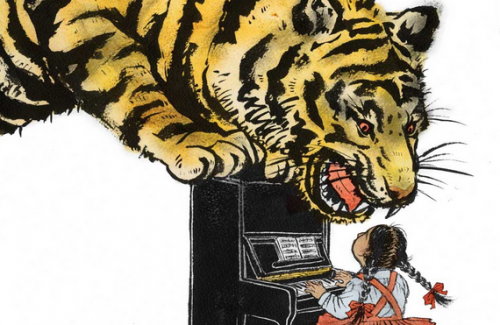
Let’s revisit Steven He’s joke: Timmy is used as a benchmark for comparison. The only way for Steven to save face is by climbing the same ladder and offering Timmy a similar spiteful insult. This vicious cycle of comparison fuels crab mentality within families, peers, and the broader community. True to reality, Asian students often spend countless hours in extra classes and clubs to meet rigorous expectations. Tiger moms push their children to excel in every class as if their lives depend on it. There is no middle ground—you’re either a winner or a failure.

This brings us to the final facet: the absence of praise and apologies. Ironically, according to BBC and Vocal Media, Asia is home to some of the politest people in the world, with countries like Japan and Thailand leading the way. Despite this, hierarchy plays a pivotal role in relationship dynamics. To save face, many Asian parents rarely offer praise to their children. Astonishingly, when it comes to apologies, parents often go to great lengths to defend their actions rather than acknowledge their mistakes. 

A similar response can be seen in Asian workplaces, where higher-ups are more inclined to criticize and are far out of reach from their team members. Individuals will praise their peers and colleagues in hopes of receiving similar treatment instead of actual commemoration. Workers often segregate themselves into teams of interest to promote one another instead of collaborating as a group. These groups create outcasts who, despite their talents, are looked down upon and have their accomplishments taken or snuffed out by negative criticisms. This reluctance to give praise and apologize reinforces a mindset of self-achievement above all else. At first glance, mentality such as these are not wrong, but they leave cracks for detrimental thoughts of arrogance and selfishness – ultimately sustaining the crab mentality.

While this article explores the crab mentality within the Asian community, it is important to recognize that this negative mindset is not exclusive to any one group—it exists everywhere. The concepts of face, self-achievement, competitiveness, community, and sacrifice are what make Asian heritage unique and beautiful. This work argues that these cultural elements are not the root cause of the crab mentality, but rather, insights into why such a mindset may emerge. 

Avenue of Stars, Hong Kong

News

The Rise of Asian Representation in Food Shows: A Lunar New Year Celebration

Credits: Patricia Ratulangi Vice President, Global Communications Nielsen

In recent years, food shows featuring Asian chefs and cuisines have seen a surge in popularity, capturing the attention of diverse audiences around the globe. This trend highlights the growing appetite for cultural representation and inclusivity in entertainment. As we celebrate Lunar New Year—a holiday deeply rooted in food traditions—it’s the perfect time to reflect on how Asian representation in food media resonates with viewers and drives mass viewership.

Food shows featuring Asian chefs and cuisines highlight cultural diversity, resonating with audiences and driving viewership, especially during Lunar New Year celebrations.

Food shows stand out as a medium where culture, tradition, and storytelling intersect seamlessly. Programs like Top Chef, which has featured contestants such as Melissa King and Hung Huynh, and The Great American Recipe, where home cooks celebrate diverse culinary heritages, showcase the rich variety of Asian cuisines and the personal narratives behind them. These stories invite viewers to connect with the cultural roots and contemporary adaptations of dishes they may have never experienced before.

2024 Viewing MinutesAsianTotal U.S.
Top Chef‎‎  ‎ 458.0 million5.7 billion
The Great American Recipe‎ ‎ ‎ 9.8 million84.5 million
Chrissy & Dave Dine Out‎‎  ‎ 9.2 million61.4 million
Dinner Time Live with David Chang‎ ‎ ‎ 67.4 million430.1 million
Source: Nielsen audience measurement: Jan 1 – Nov 30, 2024

Lunar New Year exemplifies the central role food plays in cultural celebration. From dumplings symbolizing wealth to fish representing prosperity, the holiday is a sensory feast steeped in meaning. By spotlighting Asian chefs and their innovative approaches to dishes that represent their heritage, food shows bridge the gap between cultural nuance and modern audiences. 

A Tết (Vietnamese Lunar New Year) tray filled with traditional Vietnamese dishes for Lunar New Year, symbolizing happiness and peace.

The success of Asian-centered food programming aligns with broader audience preferences for authenticity. Nielsen data reveals that 63% of viewers are more likely to support brands and content creators that authentically represent diverse communities. For mass audiences, this means a greater willingness to engage with shows that go beyond superficial portrayals and offer genuine insights into Asian culinary arts.

The viewership data highlights the significant appeal of food shows among both Asian audiences and the broader U.S. audience, underscroring the growing đemand for authentic, inclusive food shows that celebrate diverse cultures.

Nielsen Chart A
Nielsen Chart B

As Lunar New Year festivities fill homes with the aroma of traditional dishes, the increasing visibility of Asian representation in food shows reminds us of the universal power of food to connect people across cultures—one dish, one story at a time.

Elegant Cinematic Wedding Thumbnail HD 169 (4)-png

Stories

Michele Wong McSween Brings Chinese Culture to Life Through Gordon & Li Li

Navigating one’s cultural identity is confusing, especially in a diverse nation like the United States (US). One minute, you proudly claim that heritage of yours, and two seconds later, you feel as if your identity were the main character of a roast party. That carries on to the parents, who face the challenges of keeping their children connected to their roots amidst the complexities of a multicultural society. 

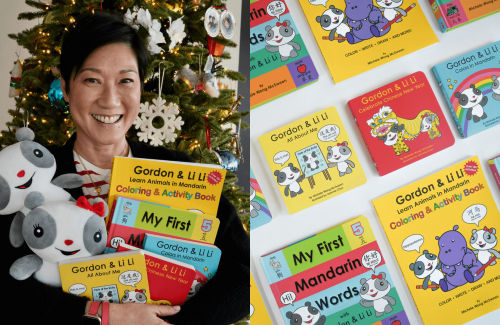
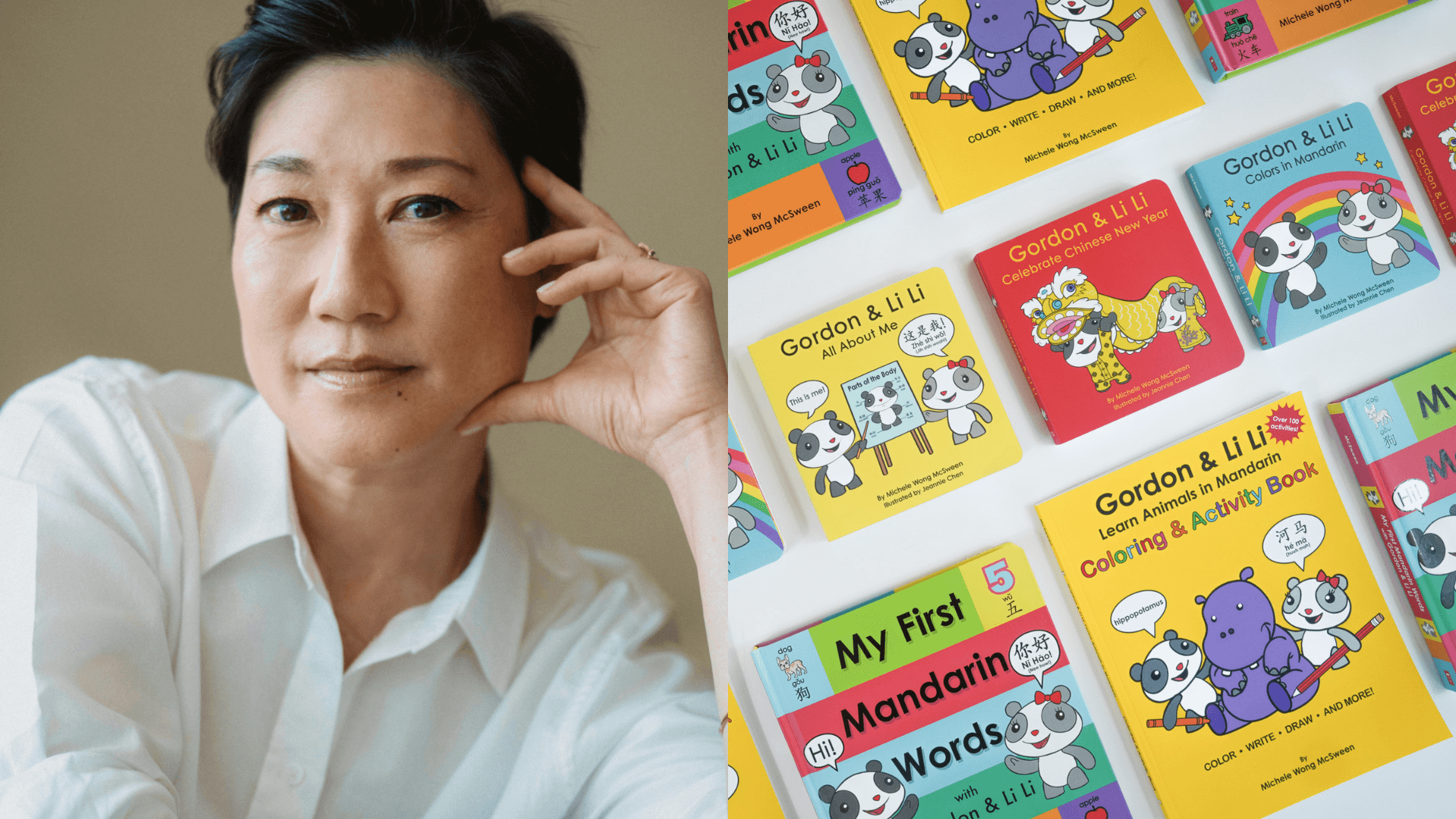
As a Chinese parent, Michele Wong McSween knows this all too well. By the time Michele became a mother, the pressure of teaching her children Mandarin had only grown stronger. That gave birth to “Gordon & Li Li,” a series of books designed to make learning Mandarin and connecting with Chinese culture fun and approachable for kids.

Michele Wong McSween cleverly dilutes the weight of this language in her new upcoming books, Gordon & Li Li: Celebrate Chinese New Year Coloring & Activity Book and All About Me, inspiring families to embrace their heritage, one book at a time.

Throwback New Year

Back in her early Lunar New Year days, Michele would help her mother decorate the house with blossoms, prepare lucky foods, and then gather at her grandparent’s home for a joyful dinner celebration. And what’s Lunar New Year without the iconic Hong Bao (red envelopes) and the sounds of familial peals of laughter? It was these little moments with her family that developed a lifelong passion for Chinese culture and language.

But the mounting pressure of growing up and starting a family soon dawned on her the challenges of instilling that same cultural pride in her children. “As a fourth-generation Chinese American, I didn’t grow up with the gift of language, and I found the books that existed to be intimidating, old-fashioned, and uninspiring,” she says. “How could I expect my children to get excited about learning a language when I wasn’t even inspired to?”

The Birth of Gordon & Li Li

The struggles to find suitable and engaging resources for her kids to learn Mandarin inspired Gordon & Li Li, a children’s book series that takes readers on the journey of two main characters, Gordon and Li Li. Mandarin Chinese is already a tough language, let alone studying it like a daily chore. So, she created her own educational books that blend entertainment and cultural values while adapting to modern technology, making these lessons more engaging and accessible.

The initial concept was to become the “go-to” board book series for families eager to introduce their little ones to Mandarin and Chinese culture. Within three years, I self-published three books, but as my children grew older and their learning needs changed, I knew I had to create something that could grow and engage with them in this next phase. Seeing how much they loved learning on an iPad, I entered the technology world and created and launched the Gordon & Li Li: Learn Animals in Mandarin app on iTunes in 2012.

Recognizing the challenges she faced while teaching her children Mandarin, she came up with the idea for "Gordon & Li Li" - a fun and engaging book series to help children learn Mandarin.
Recognizing the challenges she faced while teaching her children Mandarin, she came up with the idea for “Gordon & Li Li” – a fun and engaging book series to help children learn Mandarin.

For all the grand visions, there lie the grappling challenges Michele must balance: being both a full-time mother and a founder. Her working hours began when her children went to bed, often ending late into the night, only for her to start the day all over again. Not coincidentally, these burdens are further intensified by her lack of experience in publishing, marketing, or business management.

As a mom of three boys, the hardest part was trying to find the time and energy to spend on G&L while balancing the demands of motherhood. My work day wouldn’t begin until the boys were in bed. I’d clean the house, spend a few hours on G&L, go to bed by 1 a.m. or 2 a.m., then start the day all over again. On top of that, with no training in publishing, marketing, or running a small business, I often felt like I’d take one step forward and 100 steps back.

In those moments, the fleeting thoughts of giving up are already tempting enough. Despite this, her commitment and perseverance led her on a fortress path. Better still, the “heartfelt” feedback she received along the way has proven to be highly worthy and rewarding. After all, trees will bear fruits—and her fruits can help sustain many following generations on the heritage tree.   

Sixteen years in, and I’m finally learning to embrace the challenges as opportunities to grow instead of seeing them as failures. I’ve surrounded myself with a supportive network and a strong community, and I’ve become more patient with myself as I learn new skills. I’ve also learned to practice self-care because self-care isn’t selfish—it’s essential!

Michele Wong McSween continues growing this age-old tree of Chinese heritage through her two upcoming books, each offering a unique and engaging way for children to learn Mandarin.

Gordon & Li Li: Celebrate Chinese New Year Coloring & Activity Book and the Impact of Lunar New Year and Family

Michele’s work shows an emphasis on family, which is placed at the forefront in many Asian households. Her upcoming book Celebrate Chinese New Year Coloring & Activity Book is a reflective extension of that value, whereas Lunar New Year has always been traditionally associated with family gatherings. “My favorite childhood memories of Lunar New Year were the source of inspiration for Gordon & Li Li: Celebrate Chinese New Year,” she says. “These core memories have inspired me to continue the traditions with my own children and through my book. I hope that families everywhere can enjoy celebrating Lunar New Year, whether they’re reconnecting with their heritage like me, or learning about it for the first time.”

With the Celebrate Chinese New Year Activity Book, I hope to bring the fun and festive traditions of the Lunar New Year to children through interactive, hands-on activities. I specifically designed it to engage with kids as they grow. From simple coloring and matching activities to more challenging ones like Chinese Character Search, Crosswords, and Find the Differences. This book has something for everyone and helps connect children of all ages to the excitement and significance of the New Year.

Michele's upcoming book, Celebrate Chinese New Year Coloring & Activity Book, reflects her childhood memories of Lunar New Year and aims to engage children of all ages with interactive activities.
Michele’s upcoming book, Celebrate Chinese New Year Coloring & Activity Book, reflects her childhood memories of Lunar New Year and aims to engage children of all ages with interactive activities.

Exploring Body Awareness With Gordon & Li Li: All About Me

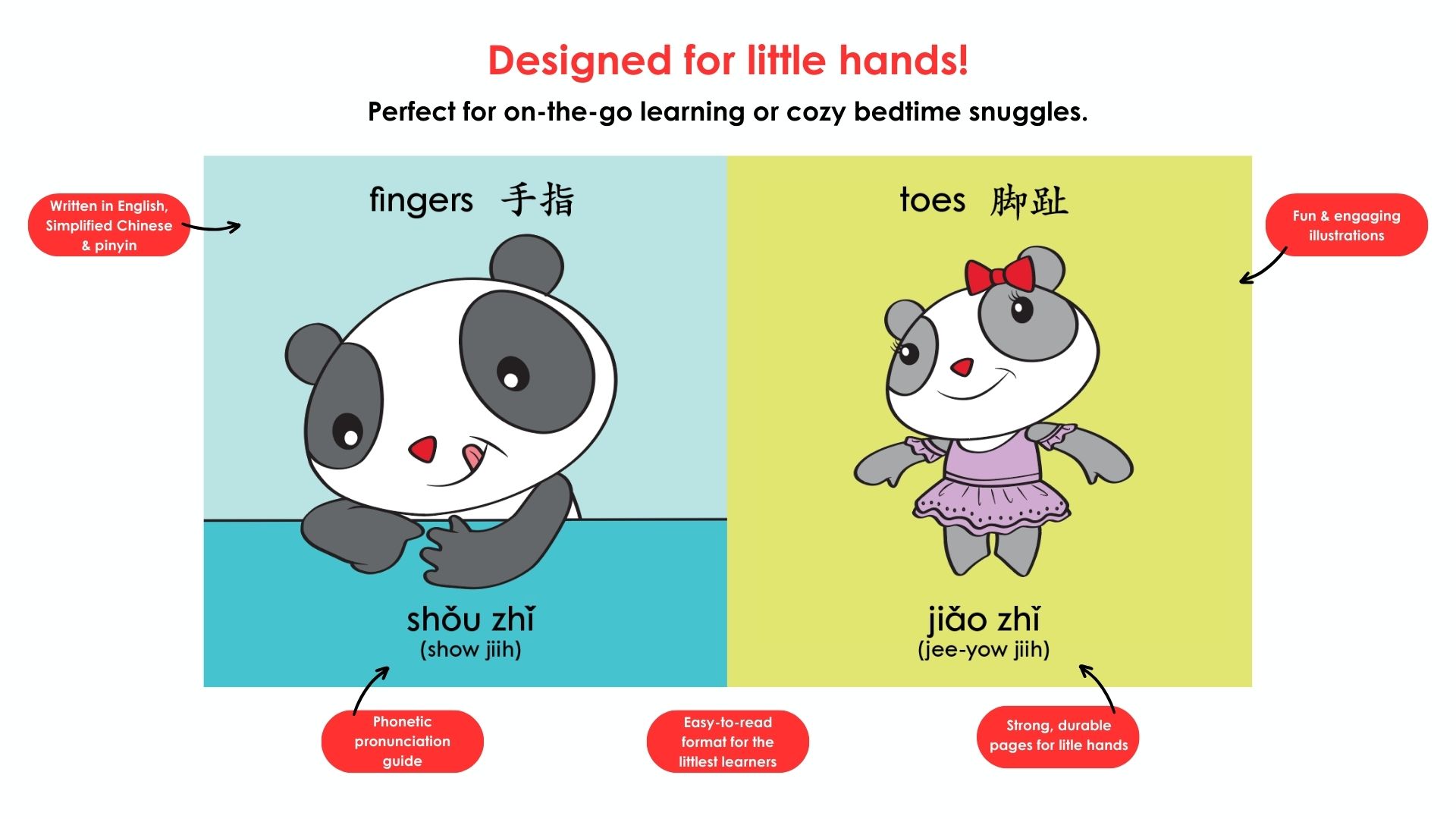
Gordon & Li Li: All About Me, on the other hand, tackles something closer and more physical, introducing young readers to parts of the body through Mandarin. Illustrated with playful and colorful artwork, each page opens a world of body parts such as fingers, toes, and shoulders. Basic words like “fingers” (手指, shǒu zhǐ) and “toes” (脚趾, jiǎo zhǐ) are demonstrated in fun and engaging ways with real-life examples to help children apply the words to their everyday activities. For example, “I am counting my ‘shǒu zhǐ’” or “Li Li is dancing ballet on her ‘jiǎo zhǐ.’”

Gordon & Li Li: All About Me introduces young readers to body parts in Mandarin, using playful illustrations and real-life examples to teach words.

This thoughtful approach allows children not only to learn new words but also to develop an early connection to body awareness and confidence. The simple, portable layout makes it perfect for children to carry wherever they go. And that’s not all! As the book comes to the last page, children can also practice singing along to the childhood anthem “Head, Shoulders, Knees, and Toes” in Mandarin, creating a fun and memorable activity for young readers.

Children reading a book from Gordon & Lili

Celebrate With Special Giveaways and Events

The journey is long, yet, the fruits are arriving. Landing a deal with Scholastic and building connections with talented individuals within the AAPI community has been inspiring and defining in her growth, professionally and culturally. 

What I’m most proud of is seeing the pride in my sons’ faces and the deeper cultural connection we’ve built as a family through this shared experience. It fills my heart with pride knowing that Gordon & Li Li connects us as a family and it inspires me to continue creating something meaningful for my boys—and for families everywhere.

In celebration of her new book’s release, Michele Wong McSween is hosting exciting Lunar New Year events and giveaways! These events are perfect opportunities for families to explore the books in-depth, enjoy a range of interactive activities, and learn more about Chinese culture and language. Stay tuned to AHN or Michele’s social media (mentioned below) for more updates on the giveaway!

Yet, Michele’s vision does not stop there. She shares that another book is already in the works, called Gordon & Li Li: ABC’s in NYC, set to launch in time for AAPI Heritage Month! This exciting new book will introduce children to learning their ABCs while exploring Gordon’s hometown, New York City.

Connect With Michele Wong McSween

Facebook: Gordon & Li Li 

Instagram: @gordonandlili

Website: Gordon & Li Li