Stories

March 17, 2023

SHARE:

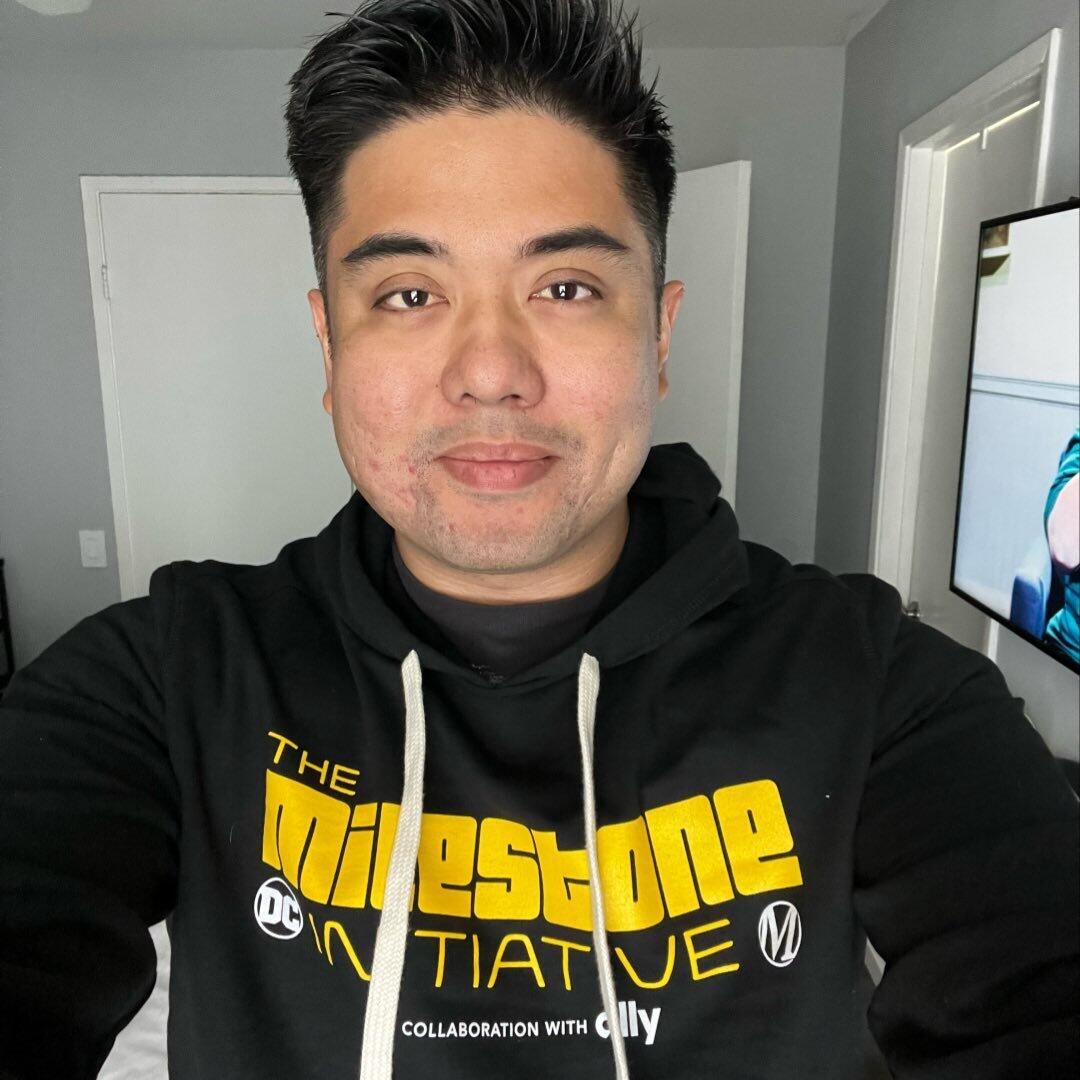
Nathaniel “Nathan” Cayanan is a Filipino-American currently working as a lecturer at Cal State Fullerton part-time, where he teaches business communication. He has been teaching English composition and academic writing for almost a decade and has been in education for 17 years, 8 of those years in college. He studied creative writing and screenwriting at USC and earned a master’s in writing because he wanted to be a filmmaker, but found himself teaching English comp – which he loved for a time.

On a whim last year, Nathan applied for DC Comics Milestone Initiative, a talent development program created in partnership with groundbreaking publisher Milestone Media and Ally Financial for marginalized writers and artists who want to break into the industry. It was highly competitive, but, somehow, the story he wrote for the application caught their eye, and he was officially accepted into their inaugural class. He took part in a program that mentored them as they tried to advance in the comic book industry.

He’s putting more effort into his creative career, not only writing some comics or graphic novels but drawing too. Now, he will be making his DC Comics debut as a writer. His story features the superhero Icon during the Cambodian Civil War.

With his first story to release in just a few months, Nathan’s career is on the rise. But how did he get to this point? Let’s explore the decisions and experiences that brought him here.

I APPLIED BELIEVING THAT I WOULD FAIL

I’ve always loved stories, be they in movies, books, or comics. I have read comics ever since I was about eight years old, my first comic being Batman #416. I watched movies as much as I could growing up, falling in love with not only the stories, but also the craft of telling them. 

I studied creative writing and screenwriting, but as most people know, it’s not a career rife with opportunities, so I found a day job teaching while I tried to develop my creative career. But teaching was a job that took a lot of time and energy, so the amount of effort into my writing career was relatively low. I loved teaching, so I was okay with this for a while, especially since I constantly got rejections for stories I wrote. In short, I settled.

However, about 5-6 years into my college teaching career, I started to feel pigeonholed. Despite earning stellar reviews and even winning Teacher of the Year in 2018, I wasn’t getting consistent opportunities. I was passed up for full-time positions several times. And even though it’s common for adjuncts to make up for a lack of full-time work by finding employment at multiple colleges, many community colleges would not hire me to teach part-time despite me having more experience and qualifications than other candidates they did hire.

So, I realized I needed to let go of this career and go back to school in 2019 for something more practical and get an MBA to pursue opportunities outside higher ed. My logic was that I would continue to teach part-time at only one school and leave my admin job at another school, while I went to graduate school (again).

Then the pandemic happened, and I started to also lose some of the classes at that school because of low enrollment and cut hours. Simultaneously, while I was doing well in my business program (I was earning a 4.0 at the time), I was a bit depressed. The world was collapsing, people were just very unpleasant, student-teacher dynamics changed, and I felt like a failure in TWO careers I pursued.

I applied for the Milestone Initiative, thinking that I’m going to just go work in an office if I give up my passions completely, so I might as well make one last effort and “die trying,” knowing that I fought until the bitter end. I actually applied believing that I would fail and that I just needed one more rejection letter to make it official. But, instead, I was accepted, and that really changed things moving forward.

The world was collapsing, people were just very unpleasant, student-teacher dynamics changed, and I felt like a failure in TWO careers I pursued.

nathan cayanan

CREATIVE INFLUENCES

I have so many creative influences. In film, there are Wong Kar Wai, Christopher Nolan, Quentin Tarantino, Martin Scorsese, and Aaron Sorkin.

If we’re talking literature: Haruki Marakami, Juno Diaz, Amy Tan, Lan Samantha Chang, Edgar Allan Poe, Cormac McCarthy. Comics, Tom King (who was my mentor in the Milestone Initiative), Scott Snyder, Jim Lee, Alan Moore, and Frank Miller. I mean, this list can go on and on, and they all have different influences on my creative voice and eye.

Digital illustration of Sugar Pie DeSant, Filipina jazz singer in the mid-1900s. Drawn by Nathan Cayanan. Colors by Lala Narita.

CHALLENGES OF TRANSITIONING INTO THE CAREER

Most of my work so far is indie and still in the process of being made. I have one comic I’m writing and drawing and any money I get will come after it’s printed, and assuming that it sells enough.

Similarly, I have a graphic novel I’m writing, and an artist is drawing it, and we’ve been offered the opportunity to publish it when it’s finished, but we won’t see a dime until we see units sold in the future. This is why many of us have day jobs. I still teach, just less than I did, and only at a university closer to home. But we do this because we love the art of telling stories.
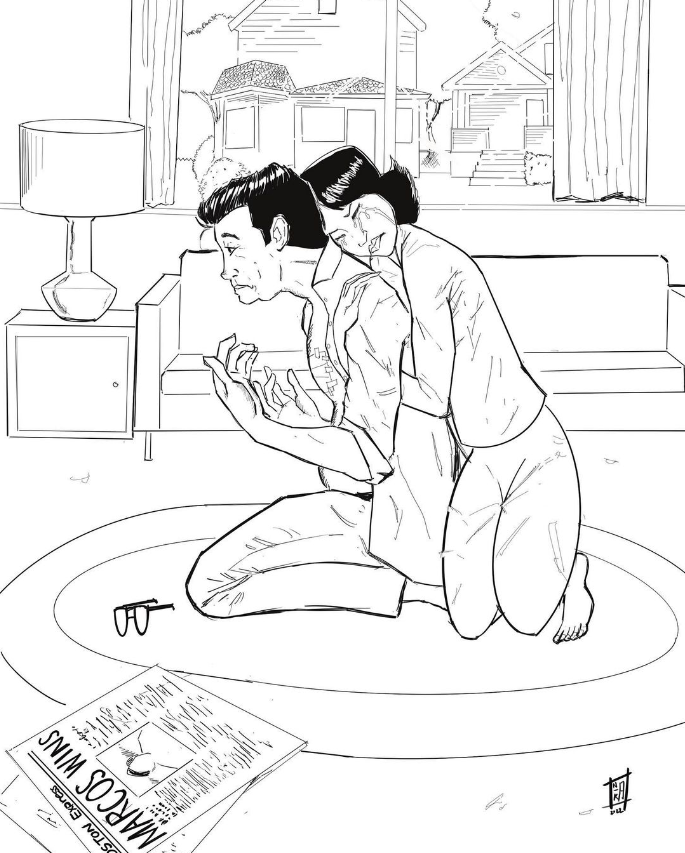
Drawn by Nathan Cayanan: Ninoy Aquino, a Filipino politician who was assassinated during Ferdinand Marcos’ rule in the Philippines. This illustration depicts Aquino and his wife, future president Cory Aquino, when they lived in Boston, after he was exiled for standing against Marcos.

ADVICE FOR ASPIRING WRITERS OR ARTISTS

It’s not easy, and I think admitting that first is important. Too many young aspiring artists ask for advice, but what I feel like they’re asking is how they make this a career where the opportunities are plentiful, the money is endless, they can do it only from 9-to-5, get a 401K, and feel happy 24/7.

Every person I’ve met in the creative world (especially in comics) has said the same thing. It’s a grind. But, if you love the art, I mean genuinely love it (as opposed to the potential for fame and money), then go for it. But, as many writers and artists have told me, 90% of us have a day job. So, prepare to work, even if you make it. And even when you do, enjoy it, because it may not last.

Also, while it may not feel like it should be important, your ability to work and communicate with others is highly important. VERY few people are talented enough to never have to interact with others. Instead, most must be able to work with each other.

Editors have told me that they don’t care if you’re talented. If you’re not professional, no one’s going to give you the opportunity, especially if you’re rude, always late, flakey, or overly stubborn. You don’t have to be the life of the party or admired by the masses. But surely, you have to be reliable and don’t be a d*&k. 

Drawn by Nathan Cayanan: “It just speaks to the times as we see Asian hate crimes on the rise.”

Website: nathanielcayanan.com

Instagram: @nathan_a.k.a
Related Articles

Duolingo Shares Climb 7% as Users Swarm to App to Learn Mandarin (7)-png

Stories

Jennifer Chun Blends Tradition With Innovation to Create Sustainable Fashion

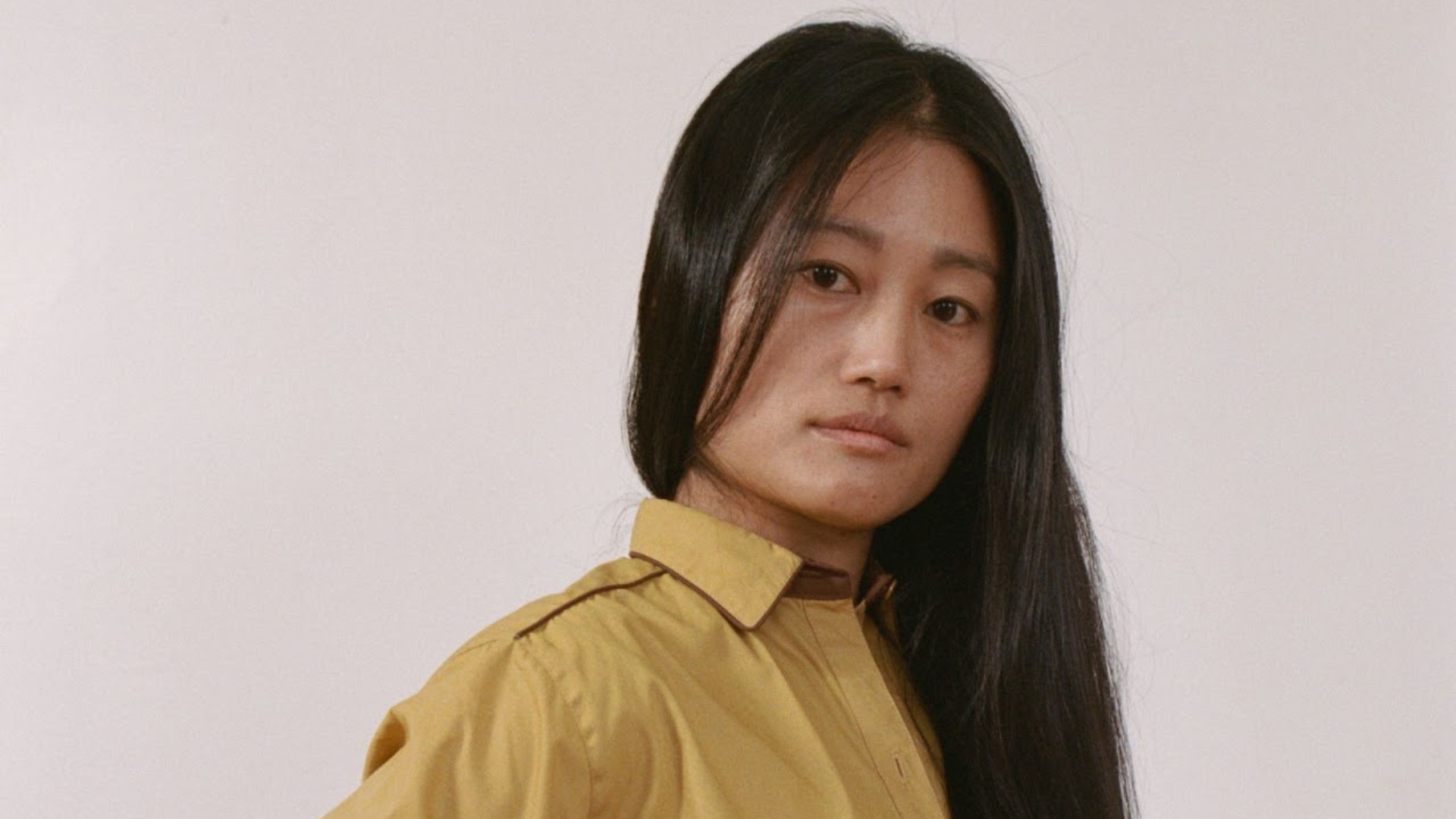
Jennifer Chun, Uniformed’s designer, brings a refreshing collaboration of Korean-American heritage and sustainability practices. Her story began during the pandemic, when she discovered traditional natural dyeing techniques. After connecting with experts and artisans, she came to Korea and got directly involved in the dyeing lessons. “I had no idea Korea had its natural dyeing traditions,” Chun shared.

Her collection is a celebratory integration of hand-dyed materials and fabrics from traditional markets to create a sustainable, limited-edition line.

Jennifer Chun blends her Korean heritage into her sustainable fashion line, Uniformed. (Photo credit: Wayn Ohara Reid)

Overcoming the Challenges of Slow Fashion

Amidst the growing world of fast fashion, it is clear that Chun’s main challenge lies in maintaining sustainability while navigating an industry deeply accustomed to mass production and fleeting trends.

Fashion has changed so much that consumers want items faster or cheaper because we have gotten used to mass production. I make such limited quantities that it can be a challenge working with factories that would rather produce en masse and do not want to make specialized pieces that take thought or time, as producing less can increase manufacturing prices. It’s difficult to educate consumers on this when even people in my industry aren’t aware of what goes into the whole process.

During the global lockdown, designer Jennifer Chun found an unexpected bridge to her Korean heritage through a chance encounter with an article on Korea’s natural dyeing traditions—an art form predating the country’s unification.

I came across an article about Korea’s natural dyeing and artisans. I had no idea Korea had its own natural dyeing traditions and techniques that predated the formal unification of Korea. In the article, they interviewed a natural dyer outside of Seoul, and I decided to just email her. My mother was in lockdown, living in LA, and like many senior citizens, the isolation was incredibly difficult. So I asked her to collaborate with me by helping me communicate with the natural dyer.  

We all eventually became pen pals. Once travel restrictions were lifted, my husband and I visited my father, who was living in lockdown in Korea. We made arrangements to meet with the natural dyer and visited her indigo farm and studio. She taught me how to cut the indigo and showed me the basic process of her craft. She suggested we collaborate.

The line developed from there, eventually leading to a capsule collection, incorporating fabrics developed in Korea, including hand-dyed materials and fabrics purchased in traditional markets around the country. And constructed into limited edition pieces to ensure sustainability, and designed with a uniform aesthetic, in New York City’s garment district.

Working with Korean artists—who prioritize quality over quantity—has deepened her appreciation for true craftsmanship. ‘There is so much pride in the craft and process. They do not compromise sustainability at any cost, and I had to assure them that I wouldn’t either if we were to collaborate,’ she explains, highlighting Uniformed’s commitment to sustainability.

Jennifer, while in South Korea.

Integrating Heritage into Design

Jennifer is not one to shy away from how her heritage has a profound impact on her design. She takes great pride in how it informs her work, and she has learned to combine these cultural elements more skillfully as she refines her craft. “With Uniformed, I am really proud that I have been able to bring my Korean American heritage into my designs,” she shared. “None of this is easy or formulaic, but it is a new, interesting, and inspired challenge.”

The opportunities to reconnect with her roots, meet local artisans, and learn new techniques have been both humbling and transformative for Jennifer. “It can be a very humbling experience to adopt a new perspective and craft after working in this industry a certain way,” she reflected. “You’re almost starting over and sometimes have to prove yourself, but it’s all been worth it for the new experiences.” This humility and commitment to continuous learning form the foundation of her design philosophy and entrepreneurial values.

Fashion with a Global Vision

Jennifer’s ultimate goal for Uniformed is to collaborate with artisans around the world, incorporating the diverse experiences of Koreans globally. “I want to understand more about Koreans in different parts of the world,” she shared. By blending these cultural perspectives, she aims to create a brand that celebrates the universal appeal of the ‘uniform,’ merging tradition with modernity.

Jennifer Chun’s design (Photo Credit: Kim Jae Min)

Connect With Jennifer Chun

IG: @uniformed_world

Website: uniformedworld.com

250506_AHS-EMAIL-MKT-jpg

Blogs, Technologies

Zero-Click Content: The Secret to Boosting Your Brand Visibility

Not every SEO win needs a click. With zero-click content, you can build visibility, authority, and trust—right from the search results. Here are 3 ways to make it work for you:

Answer Questions Directly

Create concise, clear answers to common search queries to increase your chances of landing in featured snippets.

Answer Questions Directly

Use Structured Data

Implement schema, a special code to help search engines understand your content better.

Prioritize Value Over Clicks

It’s not always about Google and clicks. Utilize your social content that gives immediate value to build authority and encourage users to seek you out.

Why Asian Hustle Solutions?

Want your brand to show up, stand out, and stick—even without the click? At Asian Hustle Solutions, we create zero-click content that builds trust fast and keeps you top of mind. Let’s make your digital presence work smarter.

If you want to learn more about our services, visit the Asian Hustle Solutions website at asianhustlenetwork.com/services/

250428 (2)-jpg

Blogs, Ideas

Turn Clicks Into Customers: 3 Essential Tips With Asian Hustle Solutions

Creating a website is an easy task, but turning the visitors into loyal customers may take more than that. Here are three tips to help you bring in more customers.

Build Trust Fast

“Show, don’t tell.” People are not going to believe you just because you say big words. Actions matter. Include your portfolios, testimonials, or reviews. People buy from brands they trust.

Build your brand symbol.

Capture Leads Immediately

“Seize the moment.” When leads show any initial interest, don’t just sit still and do nothing. Offer them a freebie (discount or resource) in exchange for their email. Stay in touch and build a fun process to guide them towards a purchase.

Capture Leads Immediately

Make Buying Easy

Simplicity is key. Clear calls-to-action, smooth checkout processes, and multiple payment options make it easy for visitors to say “yes.” Don’t expect leads to commit if the purchase process lasts over three working days.

Why Asian Hustle Solutions?

Getting traffic is just the start—we help you turn visitors into loyal customers. With smart strategies, optimized designs, and proven tools, Asian Hustle Solutions empowers your business to grow faster and stronger online.

If you want to learn more about our services, visit the Asian Hustle Solutions website at asianhustlenetwork.com/services/

250423-jpg

Blogs, Development

Search Intent: The Overlooked SEO Metric That Beats Algorithm Updates

Before choosing SEO keywords, you’ve likely considered high-volume terms and difficulty metrics. But to weather never-ending algorithm updates, search intent might be your golden ticket. Here’s why:

Customer Intention

The most critical factor in keyword selection—it ensures your content aligns with what customers actually need (not just what they search).

customer_intention

Relevance

A keyword may be popular but irrelevant to your brand. Focus on phrases that mirror your customers’ pain points and your solution.

relevance

Existing Ranking

Overlapping words can lead to cannibalization. For every new content, use fresh keyword sets to re-optimize existing assets and further align with customer needs.

existing_ranking

Why AHN Solutions?

Matching keywords to customer search intent requires strategy. We craft bulletproof SEO plans to ensure your success.

If you want to learn more about our services, visit the Asian Hustle Solutions website at asianhustlenetwork.com/services/