In a world where it can be easy to feel disconnected and jaded, Serene Chan’s art is a refreshing reminder of the beauty and magic that surrounds us.
With her ability to use digital art and visual storytelling to provoke child-like wonder and capture nostalgia, Serene creates images that are not just visually stunning – but also carry a deeper message about the importance of mental health and the value of diverse cultures and communities.
Serene is a Chinese-Canadian creative and expert daydreamer who worked as a freelance traditional painter and digital illustrator for 8 years, supporting other independent musicians, writers, and artists. Alongside her art, she works full time as an accountant. Her versatile background includes her academic education in business and years of entrepreneurial experience exemplified in three of her start-up businesses.
When she’s not painting, Serene channels her artistic energy into other creative endeavors such as crafting resin crafts, thrifting, sewing, and thrift flipping.
JOURNEY TO DISCOVERING ART AS AN OUTLET
Growing up, I was extremely socially awkward and spent a lot of time in my head. I like to call myself an expert daydreamer because I spent most of my life imagining different worlds that I fit in a little bit better than this one.
When I found art as an outlet, it just made sense because it allowed me to be able to create places that defied all odds; places where stars could be captured in your hands, where dragons roam free, a place that I can call home. I was inspired by the power that all artists have- the ability to create something from nothing, especially when it doesn’t exist in the real world.
The traditional painting came naturally to me, but my immigrant parents pressured me to conform to their ideals of what a successful individual looks like and put little emphasis on my creative passions. I followed their well-intentioned guidance and wishes for their daughter to be self-sufficient one day. I did not receive the arts education I sometimes wish I received in my 20s. I followed the motions of getting a bachelor’s in business and my accounting designation, and ended up in a corporate budgets job.
Over time, I realized that going to art school does not determine the success of an artist. If I really wanted to have an art career, I was going to make it happen regardless of whether or not I had the connections or credentials to do so.
I began my art journey in 2015, starting an art website with no idea what I was doing. I transitioned into digital illustration only 2 years ago when I finally invested in an iPad to accelerate my painting process. For the last 8 years, I spent an uncountable amount of time experimenting with different tactics to maintain a part-time art career selling prints, doing custom artwork, and applying to every open call I qualified for.
I’ve spent much of my art journey finding resources to personally develop, and reached out to countless individuals in the art industry to learn about their experiences. Ambition is what fuels my love for learning and my efforts of sharing high-quality art content with the world. Though my art career is not full-time yet, I’m still excited to continue grinding it out and seeing where it takes me.
COPING UP WITH LIFE’S CHALLENGES
My immigrant parents pressured me to assimilate with society and put little emphasis on carrying out Chinese traditions from home. So, while I became comfortable with Westernized routines, I began to feel embarrassed about my culture in my youth.
I grew up developing mental health issues from suppressing my reactions to the microaggressions around me and being unable to cope with them. As time passed, I realized that resiliency comes from releasing some of the trauma and anxiety that’s been clouding my thoughts. However, it’s also understanding that although it might never disappear, it’s a part of what makes you-you. It’s transforming into someone who is at peace with the chaos and accepts it as something that has to happen in order to grow. This is why I’m now extremely driven to teach the importance of celebrating my Asian culture and incorporating the aspect of mental health to start conversations.
One of my favorite paintings with both of these concepts is “Remembered Always.” I painted this during a time when my family was trying to navigate grief from mental health-related death. Watching my family try to recover from that trauma made me realize how death, how to grieve, and mental health rarely gets talked about in an immigrant family, especially at an early age.
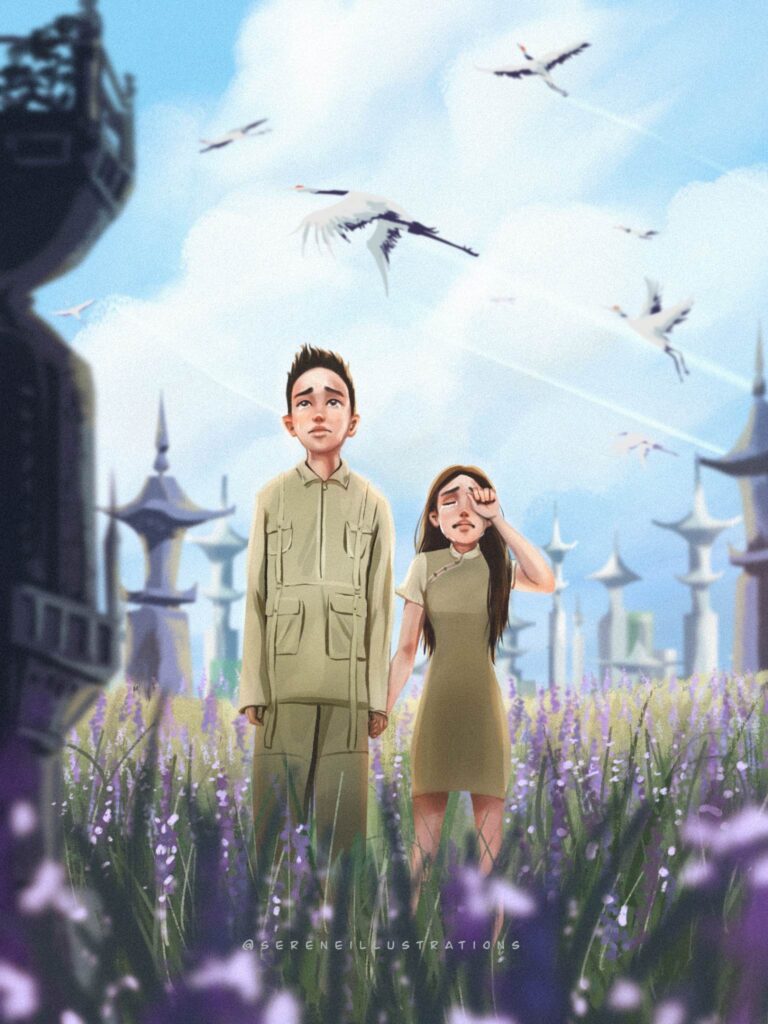
In Chinese symbolism, cranes are often believed to carry spirits to heaven after they die. This painting depicts loss remembered by the living and hopes that their spirits are brought to a happier place. My inspiration is to educate the values and symbolism the Chinese believe in to help them ease the pain of death.
PROMOTING MENTAL WELLNESS THROUGH ART
One of the worst parts of mental health is having thoughts or feelings that you can’t control. Any form of art (drawing, writing, music, etc) can be a way to express those thoughts you have. You don’t have to be good at it, or even have any experience. Using art to convey what’s on your mind lets you manifest those feelings into something physical that you CAN control.
I know sometimes it sounds easier than putting it into practice. Maybe your mind is drawing a blank. Maybe it’s too difficult to put into words what you’re feeling because there are no words in the dictionary that describe what you’re going through. I would recommend finding paintings, poetry, stories, or music that speaks to you. I guarantee you that there’s someone out there who has felt what you feel and was able to put it into art. Perhaps then, you’ll feel a little less alone knowing there’s someone else in this universe who understands how you feel.
Just know that your mental struggles are never too small or insignificant. You matter in this world, so please take care of yourself.
THE PAINTING PROCESS
My process requires more planning than most might think. Before I begin a painting, I focus on a feeling I want to capture. I then refer to the resources I regularly collect from the internet or everyday life. I take inspiration from different components found in my references to construct an image in my head.
After I get an idea of the scene, I create a very rough sketch and a color mock-up. About 80% of the time, I have to do in-depth research about every item I’m painting so I have a better understanding of how each component looks in the environment it’s in. This could mean understanding how the light impacts each object, understanding how the body looks in a specific pose, or even how clothes fall on the body when positioned a certain way. After all that work, then I can finally begin the fun part: painting!
I usually start with the background and paint the figures on top after. Because I did so much planning and prep work beforehand, the painting process is pretty effortless afterward. The entire process can range between 1-2 weeks.
Usually, the painting process is done digitally on my iPad. Lately, I’ve been doing sketches in pencil on paper before taking a picture of it and continuing the sketch digitally. I find that my hand-eye coordination is better when I can feel the pencil touch paper.
SUPPORTING AND SHARING OTHER ARTISTS’ STORIES
Art is meant to be shared and to inspire each other with our individual perceptions of the world. If I have the ability to help other artists/writers/musicians further their voices by providing thought-provoking artwork that attracts people’s attention, then why not? My art business is not only meant to share my own stories and experiences but to also help others share theirs.
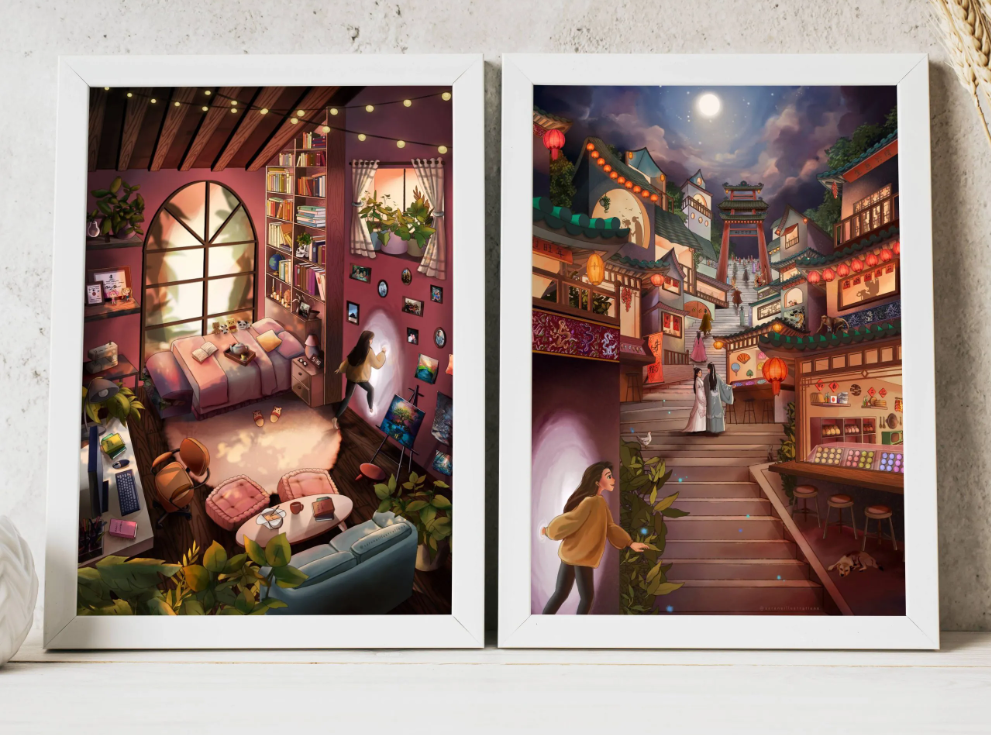
One of my favorite collaborations includes one with RBC and VIBE Arts, where I created two huge poster ads to be displayed in a Toronto Transit Commission Subway station in Toronto. This project was meant to promote women in art and what speaks to them as an artist. This two-panel illustration represents my present self in one painting and my discovering my past ancestry in another painting. The present self-painting depicts my safe haven- my ideal room filled with all my favorite art forms and passions. The ancestry painting depicts 6 different Chinese hidden mythologies in an alternate ancient East Asian universe. This project highlights the importance of my ancestry and how it’s deeply rooted in my identity today.
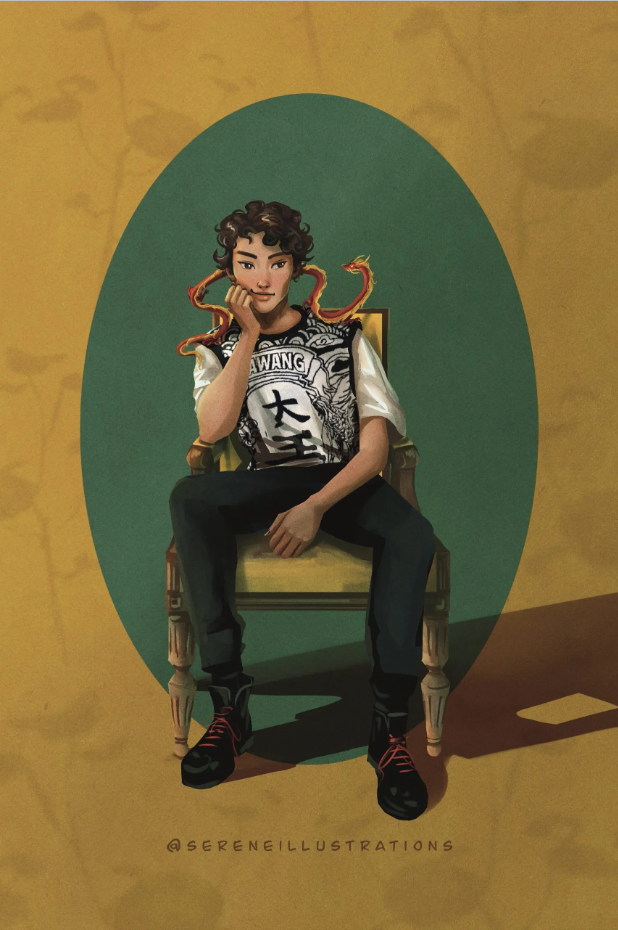
Other honorable mentions include the collaborations I did with East Asian fashion and jewelry designers, such as DAWANG and Sublima Jewelry. They both focus on promoting their East Asian heritage with a modern twist, encouraging their audiences to feel beautiful and proud of being Asian while wearing their pieces. What made it extra special for me was being able to connect with other small businesses and learn about how they bring their visions to life. Being inspired by other talented artists is truly such an honor.

COLLABORATE WITH SERENE
I have a current collaboration with DrawaDot, where I created a piece celebrating the Lunar New Year and the concept of celebration. All proceeds of this project go toward supporting emerging artists who are striving to kick-start their art careers.
I also have a super fun collaboration with Toronto Pearson Airport coming up. So if anyone is flying to Toronto… they might just see my artwork in Arrivals in a couple of months!
My hope is that my art will inspire others to appreciate the many traditions and celebrations of Asia, and help people develop a child-like wonder everyone is capable of experiencing when viewing the world. Between just you and me, I’m in the process of illustrating a self-published book that promotes both mental health and an Asian festival.

For anyone who wants to stay updated on my work and give feedback on what they’d like to see, I encourage you to sign up for my newsletter! I send monthly updates of new art, art processes, shop updates, and painting tips/tricks. If you come along on my journey, I promise you’ll find art that helps people become daydreamers and find a sense of belonging in this world.
Website: sereneillustrations.com
Instagram: @sereneillustrations