Stories

September 4, 2024

SHARE:

Have you ever struggled to find glasses that fit just right? If you have a low-bridge nose, this challenge might be all too familiar.

For many people, especially in the Asian community, finding eyewear that stays comfortably in place without constant adjustment is a common struggle.

Megan Miyamoto, founder of MIKO Eyewear, knows this experience all too well, and it’s what inspired her to create a brand that finally addresses this issue head-on.

The Inspiration Behind MIKO

Growing up, Megan often faced difficulties in finding glasses that fit well. She felt frustrated by the lack of options that accommodated her facial features.

“I was often told to ‘just shop the rack,’ which left me feeling like I needed to fit in or that there was something wrong with my facial features,” Megan shared with AHN.

When she became a mother, she was determined to give the best for her daughter, including the right eyewear. She didn’t want her daughter to go through the same difficulties that she did.

Through her research, Megan discovered that up to 80% of lifetime UV exposure occurs before the age of 18, leading to serious eye health concerns like cataracts and eyelid cancer. Yet, when she went searching for suitable eyewear for her daughter, she found the options disappointingly limited, especially for children with low bridges.

After trying countless samples, including private label options that didn’t meet her standards, Megan decided to give it a go and design a product using high-quality materials that she could feel good about. And that’s how MIKO was born.

Overcoming Challenges with Community Support

One of the toughest challenges that Megan faced as an entrepreneur is the sense of isolation that can come with building something from the ground up. 

“There were moments when doubt would creep in, and it was easy to feel overwhelmed by the sheer amount of work and decisions needing to be made,” she said.

Megan found strength in the community that rallied around her. She pushed herself out of her comfort zone, connecting with mentors, fellow entrepreneurs, and communities like Authentic Asian.

“If you took the time to connect with me, spread the word about MIKO, or made a purchase, sincerely thank you for being a part of our MIKO journey.”

The Creative Process

Seeing her idea turn into a tangible product that her daughter and neighborhood kids genuinely love is one of the milestones that Megan is most proud of. What started as a quest to fill a gap in the market for low-bridge kids’ eyewear has evolved into a brand that brings confidence and joy to its young wearers.

The design process was particularly special for Megan, as it was a collaborative effort involving her daughter and the neighborhood kids, and turning her kitchen island into a mini design studio.

During these sessions, Megan paid close attention to the kids’ feedback, particularly when it came to the fit of the glasses. They tried on various prototypes, providing insights into what felt comfortable and what didn’t. They also got to select the colors for the frames, giving a fresh perspective and opening Megan’s eyes to combinations she probably wouldn’t have considered on her own.

Seeing the kids’ faces light up when they tried on glasses that fit perfectly was incredibly rewarding for Megan. Their creative process reinforced the idea that MIKO isn’t just eyewear made for kids—it’s made with them.

MIKO’s Mission and Vision

MIKO Eyewear is dedicated to empowering the next generation by providing inclusive, stylish, and functional eyewear specifically designed for children with low bridges.

Megan’s vision is to redefine what it means to wear glasses, turning them from a mere necessity into a source of pride and confidence for kids. By addressing the unique needs of low-bridge children, MIKO not only fills a gap in the market but also celebrates the diversity of facial features, empowering the Asian community and beyond.

Connect with MIKO

Instagram: @miko_eyewear

Website: mikoeyewear.com

Get a complimentary eyeglass strap with your MIKO Eyewear sunglasses purchase! It will be automatically added to your cart. Available for the first 100 customers only!
Related Articles

Image Source: Forbes

Uncategorized

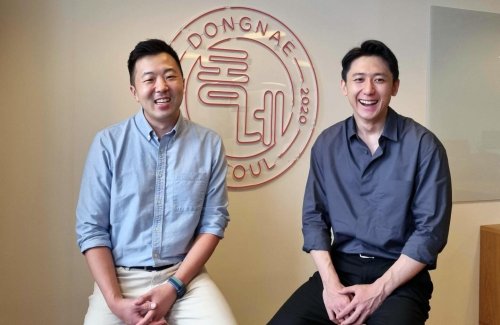
Korean Startup Dongnae Makes Apartment Hunting More Affordable And Accessible

Its key product, Dongnae FLEX, offers short-term, fully-furnished rentals with low deposits, appealing to fresh graduates or travelers unable to cough up the hefty deposits typically required of Korea’s apartments.

Former WeWork executives Insong Kim and Korean-American Matthew Shampine founded Dongnae in 2020. They are “Making it a better experience for the brokers, for the landlords, and especially for the tenants,”  Shampine said in an interview.

Dongnae has welcomed local and global investors. Its $21m series A funding round in March included Lyft and Doordash backer NFX, Airbnb backer MetaProp, and Korea’s oldest investment fund Daol Investment and Hana Financial.

More than 80% of Korean household wealth is in real estate, but it’s increasingly harder to become a homeowner. In Seoul, South Korea’s capital and most populated city, the average apartment price doubled between 2017 and 2021.

The startup company began as a listing platform for renters to book agency visits, but it was unsuccessful. Shampine believes the business model’s early failure generated “good and healthy” but painful reflections. According to Forbes, conversations with customers, brokers, and team members on the ground informed Dongnae’s goal of “becoming the supply, instead of hunting for the supply.” 

The firm switched to serviced apartments in July 2021. At the end of its current investment, the business had 60 apartment buildings; now it has 80 across 12 Seoul districts.

Dongnae wants to offer more home services to its residents in the future, taking advantage of Korea’s booming market for furniture and other lifestyle goods.

Image Source: gerryrobert.com

Uncategorized

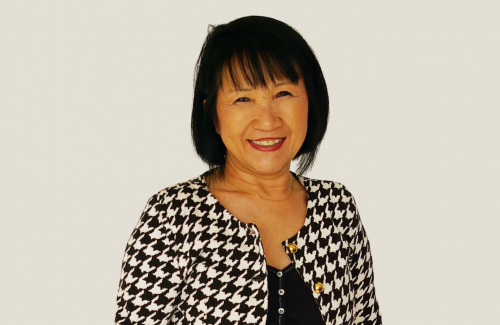
Lush Enterprises CEO Kim-Manzolini Took Trading To The Next Level To Build Her Empire

Who wouldn’t want to engage in something that generates value? It took a while before you could achieve something like this. You had to be determined and keep going to get through the process. 

Think about how CEO Sun Yong Kim-Manzolini runs Lush Enterprises as an entrepreneur and, at the same, an investor. After working in the medical field for 33 years, she transitioned into entrepreneurship and trading options. She used her same can-do spirit and created opportunities.

All of her struggles, Kim-Manzolini told the USA Today, have helped to mold her into the woman she is today. She grew up as an orphan in Korea and was adopted by an American couple at 14. As an adult, she got into an unhealthy relationship but eventually got the courage to leave and move forward.

Kim-Manzolini knows that changing careers requires a great deal of hard work and self-control on her part. For years, she dedicated many hours per day to studying the ins and outs of the options trading industry and eventually mastered it. She simply had faith that she could pull it off, so she gave it her all without holding back.

Trading options expose investors to a diverse range of potentially significant risks. Even a single misfortune can completely wipe out a trader’s profits on the foreign exchange market due to the high risk associated with trading. But Kim-Manzolini did not let the challenges she faced discourage her, as she started gaining a new perspective on the situation. Instead of questioning why her experience was challenging, she adopted the mantra “Why not me?”

And as a result, she made $178,000 in her first year of live trading. Kim-Manzolini is now the owner of a multi-million dollar business. Her understanding of how to trade successfully was aided by the incredible commitment and sacrifice she made. 

The fact that Kim-Manzolini didn’t give up when it would have been simpler to do so is something for which she is grateful. She decided to focus on the positive aspects of the situation rather than ruminating on the potential downsides. She also put in a lot of time and energy and came up with a unique approach.

Image Source: Voyage LA

News

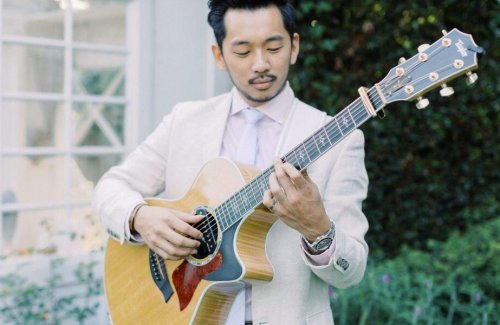
29-Year-Old Wedding Guitarist Made A Pandemic Pivot To Real Estate Earns $245K A Year

The best part is that playing weddings “doesn’t even feel like working. We’re just partying.” Moses Lin told CNBC Make It’s Millennial Money series.

Early in Lin’s career in 2016, he played at a coffee shop for three hours and got $3 tips. Today, his work takes him from New York to Hawaii, even to Cancun, and earns $175,000 before tips.

In the last two years, Lin has invested most of his wedding earnings into real estate.

Before becoming a real estate investor, Lin left college with just one semester left to pursue music full-time back in 2017. Several months later, Disney saw his YouTube videos and hired him to play in Disneyland’s hotels and restaurants. He took the job and decided he was never going back to college.

In the same year, Lin played a friend’s wedding as a favor and enjoyed it. He then charged $250 for his first wedding booking. After learning that wedding musician rates are $1200, he doubled his prices. Despite raising his rates, clients kept coming. Now, he charges $4,000 to $6,000 per wedding, depending on when the couple wants him to play. 

Lin became interested in real estate investing in 2014 and bought his first property in May 2020 as a “pandemic pivot” when Covid restrictions slowed his wedding gigs. He found a 4-bedroom house for $120,000 online and put down 20% plus $10,000 to renovate. His wedding earnings helped him buy a $40,000 home in Little Rock, including closing costs.

He rented the house for $1,425 and quickly found a tenant. He liked the process so much that he decided to buy a second property before the end of the year.

Today, Lin owns and rents out four properties in Little Rock. Lin didn’t turn a profit on his rental properties in 2021, but is in it for the long haul.

His goal with real estate is to get to a point where the passive income from his rentals pays all of his bills.

Lin pays a property manager to handle things on the ground, “so I’m able to focus 100% of my attention on weddings [and] on music, and real estate just makes money on the side.” he tells CNBC, “My whole master business plan is make money in weddings, dump it into real estate and let that grow itself.”

CONNECT WITH MOSES LIN

Instagram: instagram.com/moseslinmusic
Website: moseslinmusic.com

Image Source: kr-asia.com

Uncategorized

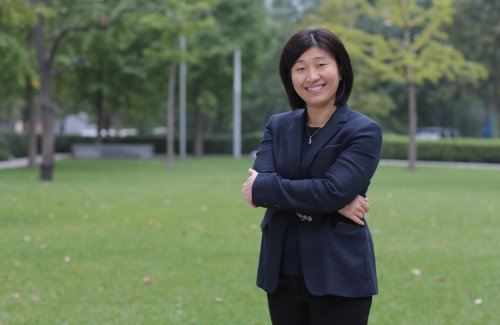
GGV Capital’s Jenny Lee: From Jet Engineer To One Of World’s Best Venture Capitalists

Recognized as one of the world’s top 100 venture capitalists by Forbes for 11 years in a row, Singaporean venture capitalist Jenny Lee stayed in her hometown to raise money for four new funds launched by her firm GGV Capital at the height of the pandemic in 2020. 

For four months, according to Forbes, the veteran VC barely slept as she made 250 zoom calls and remotely raised $2.5 billion from investors around the world. Lee and her team raised the most capital in GGV’s 22-year history, boosting assets by 27% to $9.2 billion. 

Long before she became one of Asia’s most powerful businesswomen, she earned a bachelor’s and master’s in Electrical Engineering at Cornell in 1995. She became an aviation engineer at Singapore’s ST Aerospace, where she modified F-16 fighter planes.

In 2001, the company sent Lee to attend Northwestern University’s Kellogg School of Management where she earned an M.B.A., but she had wanted to be a venture capitalist for a long time, so she quit her job that same year to follow her hidden passion.

Lee paid ST Aerospace $300,000 for not finishing the 11-year scholarship bond that paid for her bachelor’s, master’s, and M.B.A., but she has no regrets. For her, it was the best move.

She got her start as a venture capitalist at Morgan Stanley and Jafco Asia, but she made her name in China after joining GGV to create its office there in 2005. One of Lee’s more successful discoveries was the mobile phone maker Xiaomi before it had sold its first handphone.

Today, Lee is one of GGV’s top-tier managing partners along with Singaporean Jixun Foo, an early Grab investor. Hans Tung, who’s been on the Midas List 11 times. And VCs who have U.S. investment, industrial, and entrepreneurial expertise.

GGV’s 354 firms are balanced between Asia-Pacific and the Americas (GGV claims its investments include more than 85 unicorns). With the U.S. having more investments, at roughly 130, and 77 in China.

The company’s assets under management have expanded more than 50 times since its founding in 2000.