Nhut Cao is living proof that with consistency and the right plan, you will get there.
Despite facing numerous challenges while chasing his true calling, Nhut “Justin” Cao refused to be defeated by setbacks and never lost sight of his goals. His story is not simply about winning, but also about not letting the failures hold him back. You may want to grind harder after reading about his life.
In 2014, Nhut Cao made a life-changing decision to leave his home in Vietnam and move to the United States. Despite being deeply familiar with and accustomed to his old life, he made the difficult decision to leave everything behind and start a brand new life from scratch. He got into a decent college, and earned scholarships, hoping to follow the traditional American dream of getting a stable 9-5 job and settling down. But that kind of path didn’t make him happy.
So he dropped out of school and decided to pursue entrepreneurship full-time. He tried many different businesses – from garage sale hunts, reselling and flipping items, tutoring, nail tech, and selling goods from America to Vietnam.

One day, he decided to take a leap of faith and entered into Amazon FBA. Despite all the negativities circulating on the internet about Amazon FBA that time and his fear of failing, he still risked everything to go for it.
Follow along as we delve into Nhut Cao’s journey towards pursuing his dreams.
I SAW MANY PEOPLE BUILDING AN EMPIRE ONLINE BACK THEN WITH A HIGH 5 TO 6 FIGURES MONTHLY — AM I BEING TOO LATE TO THE PARTY?
I learned about Amazon FBA through a stranger in an online forum, the BrickSeek Deals Group for resellers. I always wondered how he could make money flow into his wallet so easily.
It didn’t take me long before I searched “How to sell on Amazon” on Google and Instagram. I saw many people building an empire online back then with a high 5 to 6 figures monthly. The first thing that came to my mind at that time was “Am I being too late to the party?”
I fell deeper into the rabbit hole and found myself searching Youtube on how to get started. But the more I looked, the more I stumbled upon negative opinions, including:
“Amazon is overly saturated,”
“It’s impossible to make money with Amazon FBA in 2015”
“Don’t try or you’ll dive straight into failure!”
As a young entrepreneur, I was too scared to fail at that time, so I blindly believed them.
I delayed my plan until two years later, after the burnout of being constantly on-the-run sourcing for products through garage sales, going to Walmart at 1 am trying to snatch some discounted laptop BrickSeek deals to only make an insignificant amount of profit, I was mentally and physically exhausted from the reseller hustle and being the one-man team from sourcing to listing, fulfilling orders to customer services. I escaped the rat race with the hope of earning my time back for my family and loved ones, but this life is draining me even more.
I finally gave in to the idea of risking it all to Amazon FBA. I remembered telling told myself:
“After all, what do I have left to lose as an immigrant? Nothing.”
“I don’t want to keep trading my time for money as a reseller.”
“I don’t want to continue being a one-man team doing all the work myself. If I ever fail, I still have time to make it back with more experience rather than regret not doing it”
Then I scooped up all of my savings and liquidated everything I had to start my Amazon FBA. And the rest was history.
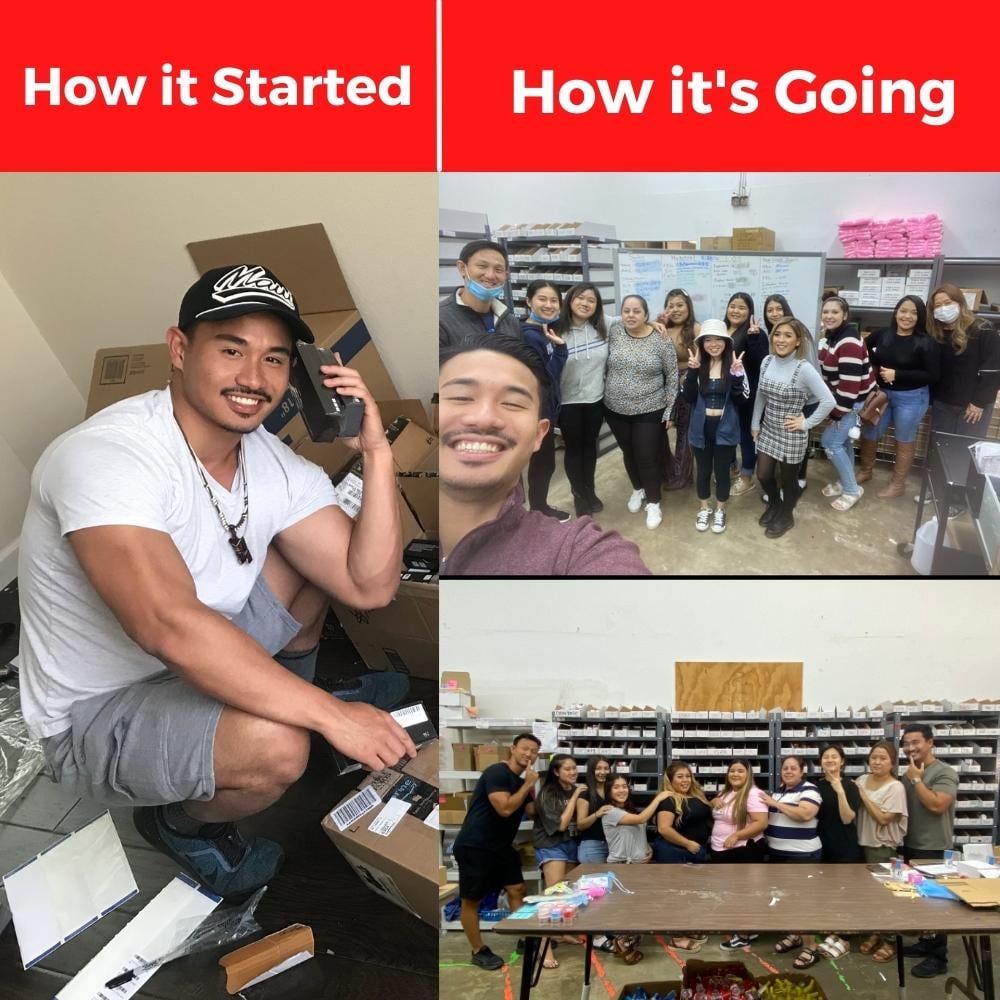
BUT YOU KNOW WHAT IS THE BEAUTIFUL THING ABOUT BEING AN IMMIGRANT? WE DON’T GIVE UP EASILY.
It was not as easy and beautiful as many other Amazon gurus portrayed it to be on social media. I was constantly making a bunch of mistakes as a new seller and sometimes fell into the trap of self-doubting for not being able to make it drift in.
I learned everything I could from Youtube. I bought courses. I signed up for classes. But after all the hard work, there was still no sign of payoff. But you know what is the beautiful thing about being an immigrant? We don’t give up easily.
I paused to rethink all of my problems and tried to seek credible information from books and the internet to solve them. Then it finally hit home to me that maybe I was too invested in the ‘how’ when instead I could start with the ‘who’.
So I started to widen my circle, find more people who were truly making money on Amazon FBA and work for them for free. In exchange, I could build a long-term, win-win relationship with them. I could ask them for help and be always surrounded by experienced sellers.
But certainly, success won’t come overnight. There were days, weeks, and even months of not seeing any progress or result. I couldn’t find a product. I couldn’t make a sale. Being overwhelmed with bad reviews no matter how much I tried to improve the quality.
I applied many methods to overcome the challenges, such as celebrating even the smallest wins every day; or breaking my biggest goal into smaller, more manageable ones. However, the principle that helped me the most during this trying time was the 1% each day approach.
Even on the most exhausting days, I am committed to spending at least 15 minutes on my business. By consistently dedicating time to my store, I developed a habit of working towards my goals, which can help me stay motivated and focused even during challenging times. And as I made progress, I found that my motivation and momentum increased, making it easier to stay on track and achieve even more.
Finally, in 2019, I was able to bring in close to $500k in revenues by 2019, thankful that I didn’t give up on myself.

STRATEGIES TO STAY COMPETITIVE IN THE CONSTANTLY EVOLVING AMAZON, ACCORDING TO NHUT
- Put data over emotions: When making business decisions, it’s important to rely on data and facts rather than emotions or assumptions.
- Surround yourself with experienced sellers: Building a network of experienced sellers can provide you with valuable insights and knowledge that can help you make informed decisions and stay ahead of the competition.
- Enhance your social presence: Building a strong social identity can help you connect with your customers, build brand awareness, and enhance trust.
- Stay away from selling me-too products: Selling unique or innovative products can help you stand out in the crowded Amazon marketplace. Focus on offering something new and different that solves a problem or fulfills a need for your customers.
- Do not rush into the game without researching: Never think that you have known it all. There’s always something to learn, especially in the ever-changing environment of e-commerce like Amazon.
MAKING MONEY IS NO LONGER MY PRIORITY
As a seasoned Amazon FBA seller, making money is no longer my priority. Instead, I’m driven to give back to my community. As the saying goes, we attract what we want, and I have been fortunate enough to connect with like-minded individuals who share my passion for helping others.

My team in Vietnam connected me with local authorities to aid those in need and support me in every step of this ‘paying it forward’ journey. I am also proud to say that my mentees have used the financial power they earned by learning from my secrets, to donate to many less fortunate lives. Isn’t it incredible how we can use our skills and resources to make a positive impact on the world around us?

TAKE A CHANCE
If I could go back in time, I would tell my younger self to trust in his abilities more. When I was starting, I got scared by all the negative things people were saying about Amazon and ran away in fear of failure. But once I learned to trust in myself, even when things were tough and I wasn’t making money right away, I was able to stay focused and keep pushing forward.
And that’s also what I want to say to anyone who’s still scared to take a chance. The hardest thing to overcome usually isn’t a lack of money or support from others – it’s the doubts and fears in your head. But you have to step outside of your comfort zone to make progress and grow.
So take that chance – believe in yourself, and remember, life starts outside your comfort zone!
CONNECT WITH NHUT
Find more about Nhut’s story at:
Instagram: @justinthehuncho @nhutcao
Website: amzshifu.com