Awaken* newsletter

March 15, 2024

SHARE:

Edwin Ong

2024.03.06

翻译:田头草

在硅谷,极少有人能像 Y Combinator 的总裁兼首席执行官 Garry Tan (陈嘉兴) 那样高调。Garry在其辉煌的职业生涯中担任过许多不同的职务。

除了领导世界上最成功的创业加速器(Y Combinator) 之外,Garry 是 Palantir (帕浪)的第 10 名员工,共同创立了 Posterous(最早的博客网站之一),创立了 Initialized Capital(管理规模超过 32 亿 美元的风险投资基金),甚至还由投资而步入政界,成为旧金山当地政治的杰出活动家。

(译者注;Palantir 帕浪公司基本上没有中文的介绍,帕浪服务的用户牛气冲天)

(译者注:Posterous 被Twitter 于2012 年收购)

我有幸有机会了解Garry 的亚裔身份如何影响他的生活,我希望他的答案能够帮助和启发我们的读者。言归正传:

一、克服有害的心态

1. 因稀缺环境而诱发稀缺的粘性心态

Ong: 

我的经验是,工薪阶级父母(尤其是亚洲移民)的孩子往往有一种因稀缺环境而诱发稀缺的粘性心态——即使他们的社会经济地位已经有所提高。加里此前曾谈到过他的“价值 2 亿美元的错误”。也就是说,他拒绝了 Peter Thiel 成为 Palantir 创始成员的邀请。对我来说,这似乎是这种心态的体现,所以我问Garry他是如何克服的:

(译者注:Peter Thiel,“奇葩的牛人,自由穿梭于法律、金融、投资及创业之间。”)

(译者注:当时Garry 是微软高薪稳定的员工)。

Tan: 

我能够意识到这些东西是双向门。以良好的条件退出一家大型科技公司实际上意味着你可以随时回去。有单向门和双向门之分。

对于与我们一样环境长大的人来说,一切都感觉像是一扇单向门。但如果你什么时候能意识到这是错误的,那么你就改造了那些有钱人默认拥有的一些特权。

Ong: 

亚马逊创始人杰夫·贝索斯(Jeff Bezos)多次谈论单向门与双向门框架。你可以在这里听到他更深入的阐述。https://m.youtube.com/watch?v=VFwCGECvq4I&ab_channel=LexClips

(译者注:单向门VS双向门,贝佐斯认为决策有两种。一种决策是单向门(one-way door),不可逆转而且非常重要。另一种决策是双向门(two-way door),90%以上的决策都属于此。也就是说,可以制定决策并执行,一旦事实证明决策错误,马上可以推倒重来,损失不大。)

2. 亚裔社区对心理健康的耻辱感

Ong: 

亚裔社区对心理健康的耻辱感,是另一种越来越受到关注的心态。就我个人而言,因为我的移民父母为了生存而拼尽全力,我觉得我没有权利抱怨我的心理健康,因为我的生活相对安逸。我问Garry这是否引起他的共鸣以及他如何克服这种心理障碍:

Tan: 

我假装自己没有任何问题,花了很多时间试图融入其中。但最终,有关我童年的事情或不寻常的留下创伤的反应,会在我的职业生活中突然出现。在某个时候,我开始单独接受治疗,这对我帮助很大。

所有这些我无法控制的事情突然变成了我可以整合和意识到的事情,并做出更好的选择。卡尔·荣格说:你未觉察到的潜意识决定着你的人生,你却将其称之为“命运”。(译者注:荣格是瑞士心理学家、精神科医师,分析心理学的创始人。)

3. 第三种常见心态是低着头,避免搅局

Ong:

我在亚裔美国人中看到的第三种常见心态是低着头,避免搅局,即使这意味着抑制自己的想法。鉴于Garry是一个非常直言不讳的人,我问他是如何培养自信的:

Tan:

我记得在高中时,我是校报的编辑,注意到我们在比较贫困高中的学生因为同样的违规行为而受到严厉的判决和开除,而在富人区的学校则仅会受到不痛不痒的轻罚。我对此非常生气,我写了一篇文章揭露它,但被我的高中指导报纸的老师审查(没过)了。我已经快毕业,并已被斯坦福大学录取了,所以我就顺其自然了。

但在我内心深处,有一种对被压制的愤怒,我永远不会忘记。

在出报纸之前,我会使用 Pagemaker (译者注:一款页面排版软件)出版“地下”报纸,而我的英语老师会为班级复印报纸 – 这给了我一种我永远不会忘记的力量。因为否则我就是角落里骨瘦如柴的亚洲书呆子,但是当我可以传达我社区的声音,我有了立足点。我从未忘记过这一点。

二、关于亚裔社区

Ong:

关于社区的话题,我问Garry 是什么促使他成为亚裔社区的积极倡导者:

Tan: 

我对旧金山的亚裔美国人社区有强烈的团结感。我们是这座城市的重要组成部分,但我们却没有被看到。我们没有被听到。

当地领导人甚至会诋毁我们为确保亚裔美国长辈安全所做的努力。现在我知道我需要为那些没有发言权的人而战。

我发现的最酷的事情之一是一个名为“亲爱的社区”的非营利组织,它将刚新到旧金山的亚裔美国人(通常是年轻的专业人​​士)以及传统的旧金山唐人街社区联系起来。看到聪明的人们聚集在一起,为这座城市的人民而战,真是太棒了。

(译者注:了解旧金山的严重的社会现状的读者,就能更深入理解Garry 的这段话)。

Ong:

我还提到他最近去新加坡参加一个名为SWITCH的创业活动,并问他对亚洲国家涌现的创业场景有何感想:

Tan:

初创公司正在世界各地涌现。您可以从 YouTube 和网络上学习。 YC 校友遍布世界各地。我很高兴看到从湾区开始的事情现在已经成为一种全球现象,而且还在不断增长。

三、亚裔创始人经验

Ong:

在朋友的建议下,我问Garry:“我可以向哪些非技术性的亚洲创始人榜样学习?对于在初创公司作为非技术员工而言,最有价值去学习的技能是什么?” Garry的回答有点挑战了我问题的前提:

Tan:

在初创公司和技术领域,技术是关键优势。如果可以的话,请更重于科技。然后成为一名博学者:科技人员掌握软技能比反过来要容易得多。

Ong:

事后看来,我承认,如果你不愿意付出努力来成为技术人才,那么期望在科技行业获得优异成果似乎很愚蠢。他给我上了一课。

四、如何看待自己的亚裔身份

Ong:

最后,我问了Garry,和我问所有受访人的问题一样——作为创始人,他如何看待自己的亚裔身份:

Tan:

直到很晚我才想到这一点。坦白说,我试图假装这不是问题,虽然绝对存在“竹制天花板”- 既使对我来说。我没有获得晋升和/或人们认为我没有能力做我所做的事情。我会愤怒地辞掉工作,这是解决问题的一种方式,但我看到事情可以有不同的解决方式。

作为一名创始人,我发现我需要提高自己畅所欲言的能力,尤其是当我知道自己绝对正确时,要尽可能自信。

我有一种隐而不发的心理,我甚至没有意识到这是为了和谐。在没有意识到的情况下,我有时会自我放弃,然后又被动地攻击它。我不再这样做了,这是我作为领导者发展的关键一步。我希望我早点发展这种能力,这都是因为我童年时无意识的编程。

(译者注:Garry 在 14 岁时开始编程,他通过制作网页和网站的互联网部分获得每小时 7 美元的报酬。这笔收入帮助他的父母支付了买房的第一笔首付。)

Ong:

我从这次采访中得到的最大收益是,“永远正确、直言不讳”的 Garry Tan 并不总是如此,而且在某一时刻,他非常像典型的亚裔孩子。Garry 的故事证明,只要有自我意识和决心,任何人都可以实现巨大的成长并成为行业领导者。

呼吁

Ong:

如果您有一个雄心勃勃的创业想法,并希望成为一个令人惊叹的创始人社区的一部分,请申请 Y Combinator! Y Combinator 每年运行两次批次——冬季和夏季。 

2024年夏季批次的申请已开放,您可以通过 https://www.ycombinator.com/apply 进行申请

感谢Garry 接受采访!

照片来源:Y Combinator

英文采访链接

Garry Tan on Startups, Advocacy, and Overcoming Cultural Mindsets

附:福布斯中国对陈嘉兴的介绍

https://www.forbeschina.com/billionaires/61673

Related Articles

KyLanActivewear-png

Stories

From Code to Culture: How Hải Bùi Left Tech to Build a Brand for Second Generation Asians

Embracing Heritage Through Style

Kỳ Lân is the first activewear brand deeply rooted in Asian aesthetics, created with a powerful mission: to empower second-generation Asians worldwide to embrace their heritage with pride. Born from Hải’s personal journey growing up Vietnamese in Hungary and struggling to find a sense of belonging, Kỳ Lân reflects what it truly means to live between cultures, and finally feel proud of that identity.

For Hải, Kỳ Lân isn’t just about clothing. It’s about rewriting the narrative for second-generation Asians and bringing Asian representation to the forefront of mainstream sports- and streetwear. 

Kỳ Lân’s mission is to help second-gens embrace their Asian heritage through clothing

The Meaning Behind Kỳ Lân: A Symbol of Heritage and Unity

Kỳ Lân is a mythical creature from Asian folklore, often described as having the head of a dragon, the body of a horse, and the tail of a lion. It symbolizes peace, prosperity, and good fortune. Versions of the Kỳ Lân appear in Vietnamese, Chinese (Qilin), Japanese (Kirin), Korean (Girin), and Thai (Kilen) cultures, highlighting the deep cultural connections shared across Asia.

Hải chose this name to honor that shared heritage. As part of his efforts to reconnect with his roots, he began volunteering in the Vietnamese community and eventually became the organizer of a 6,000-member Asian Meetup and Discord group. This community centered around 1.5-generation and second-generation Asians, those who either immigrated as kids or were born abroad to immigrant parents. Together, they explored questions of identity, belonging, and the desire to reconnect. These conversations sparked the idea for Kỳ Lân: a brand that celebrates Asian aesthetics but, more importantly, gives voice to the in-between experience many second-generation live daily.

Kỳ Lân is more than just a clothing brand, it’s a tribute to these stories and a movement towards proudly reclaiming culture.

Hải volunteering in his local Vietnamese community

The Origin Story: From Hungary to the U.S. and Back to His Roots

Growing up in Hungary in the 1990s, often as the only Asian kid in school, Hải vividly remembers the bullying, the stares, and the relentless pressure to fit in. Like many second generation Asians, he spent much of his youth trying to blend in, often distancing himself from his Vietnamese roots just to feel accepted.

It wasn’t until years later, after moving to the U.S., that everything shifted. For the first time, Hải saw second-generation Asians unapologetically taking up space, celebrating their identities through art, food, fashion, and film. Vietnamese cafés were opening everywhere, Asian artists topped the charts, and streetwear inspired by Asian heritage became more mainstream. Gradually, pride replaced shame.

He became proud to be Asian, and curiosity toward his culture blossomed.

Hải, his little brother and his mom in Budapest

His parents’ story deeply influenced him, too. They immigrated to Soviet-era Hungary on scholarships and chose entrepreneurship over low-paying engineering jobs after graduation. Their hard work and resourcefulness deeply shaped Hải’s values, even though they initially encouraged him to take a safer path.

That growing sense of cultural pride deepened during a visit to Vietnam, where Hải saw relatives and locals running small storefronts straight from their homes. Every corner was buzzing with hustle. “That’s when it clicked,” he says. “Entrepreneurship is ingrained in our DNA. No wonder I felt this constant pull to build something of my own.” 

From Software Engineer to Fashionpreneur: Finding Purpose

For Hải, the realization that entrepreneurship was in his blood didn’t make the decision to quit his job any easier. Like many children of Asian immigrants, he grew up with a very clear definition of success which included stability, a good education and a respectable job. And he achieved exactly this: a successful career in software engineering, after decades of hard work and sacrifice from his parents, who had moved to Hungary in search of a better future.

For a while, he was unsure whether to commit to building a business or return to the comfort of a tech job. However, the dread he felt preparing for software interviews made it clear that he had to make some kind of business idea work, no matter what.

Like so many second-generation Asians, Hải carried an unspoken responsibility to make his parents’ struggles worth it, to succeed and stay on the path they paved.

Eventually, the pull toward his purpose was stronger than the fear of failure.

In a twist of fate, Hải is following in his parents’ footsteps. After immigrating to a foreign country and getting a degree in Engineering, he decided to leave it all behind and pursue Entrepreneurship.

Hải’s parents threw away their Engineering degree to open their heavy metal t-shirt business back in the ‘90s.

The Birth of Kỳ Lân: A Perfect Fit 

Inspired by his parents’ own clothing business selling heavy metal t-shirts at marketplaces, Hải worried initially that they might disapprove of him following a similar path. Instead, they became his biggest supporters once they saw his dedication.

While it might seem like a waste to throw away his engineering career, Hải’s background turned out to be a great asset in building Kỳ Lân. His time at Amazon Ads taught him how to run effective digital campaigns, his logistics experience at Convoy helped him navigate supply chains, and his coding skills meant he could build his own websites without outsourcing. Even his parents’ experience running a clothing business became unexpectedly useful. 

Looking at it all together, it started to make sense. This wasn’t him starting from scratch, it was him finally using all of his skills in one place.

A Movement Rooted in Identity, Representation, and Pride

Kỳ Lân is more than just activewear, it’s a cultural movement. It celebrates the rich fusion of Asian cultures and modern sportsmanship while giving second-generation Asians a platform to proudly reclaim their identities.

Through Kỳ Lân, Hải is not only creating clothing but also rewriting the story for second-generation Asians around the world – one that embraces heritage, community, and pride.

Kỳ Lân’s mission is to help second generation Asians embrace their heritage through clothing

Connect With Hải Bùi & Kỳ Lân Activewear

To celebrate Kỳ Lân’s pre-sale, Kỳ Lân is offering the Asian Hustle Network community an exclusive 20% off with the code AHN20 – valid for one week only.

Website: Kỳ Lân Activewear

IG: @kylan.athletics

AHS EMAIL ANGLE

Blogs

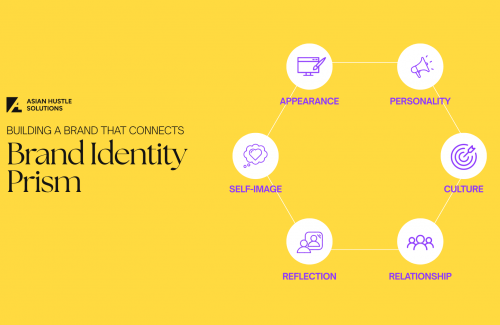
Build a Brand That Connects: Start with the Identity Prism

Every brand has a story worth telling—and how you tell it matters just as much as what you’re building.

One of the effective tools is the Brand Identity Prism—a simple but powerful framework that helps define what your brand stands for and how it connects with your audience.

  • Physique – What people see (logos, colors, visuals)
  • Personality – The voice and tone your brand speaks in
  • Culture – The values and beliefs driving your mission
  • Relationship – How your brand interacts with your community
  • Reflection – How your customers see themselves through your brand
  • Self-image – How they feel when they’re part of your world

Why Asian Hustle Solutions?

At AHS, we’ve seen firsthand how powerful a clear brand identity can be — not just in standing out, but in building real, lasting connections. 

If you want to learn more about our services, visit the Asian Hustle Solutions website at asianhustlenetwork.com/services/

samuel-jamier-png

Stories

Samuel Jamier on Paving the Way for Asian Cinema and Representation

For over two decades, the New York Asian Film Festival (NYAFF) has stayed at the forefront of Asian cinema in North America. Going into its 24th year, NYAFF is a project designed to remind the world that Asian cinema is here to stay and thrive, providing platforms for both well-established and rising filmmakers. At the helm of this meaningful festival is Samuel Jamier, a Korean French curator, filmmaker, and consultant whose passion and vision for Asian cinema drive NYAFF forward.

AHN had a chance to interview the talented Jamier on the festival’s inspiration and mission, and the future of Asian American Pacific Islander (AAPI) and Pan-Asian cinema.

Samuel Jamier | President and Executive Director of the New York Asian Film Festival and Foundation

Bridging Cultures Through Film

Over the course of his well-established career, Jamier has proved himself to be an avid enthusiast for Asian cinema who shows a clear commitment to its artistry and cultural authenticity. Jamier has gone from Chargé de Mission for the Cultural Services of the French Embassy, through his experience working with The Korea Society, The Japan Society, to becoming the guiding force behind NYAFF. 

As a Korean adoptee raised in the idyllic Brittany of northwestern France, it is natural that his journey was one of cultural navigation and a lingering yearning for heritage connections. All this lifelong commitment to Asian cultures made it intriguing to learn where it all began—turns out not all those who wander are lost.

I was always drawn to stories that challenge conventions, that shake you awake in the middle of the night. My inspiration came from literature, philosophy, and cinema—works that make your heart pound and your mind race like you’ve had too much caffeine.

Traveling and living in different countries in my 20s rewired my brain. Experiencing cinema across different cultures made me realize the immense power of storytelling. I was particularly struck by the underrepresentation of Asian narratives in global film industries, which fueled my drive to bridge that gap through my work at NYAFF and beyond.

Jamier, a Korean adoptee raised in France, has dedicated his career to championing Asian cinema and bridging cultural gaps through storytelling.

Leading a “nomadic” life throughout his 20s has reframed his understanding of storytelling, endowing him with the severely underrated power of Asian narratives in global media. That realization has become some sort of a push for him to challenge stereotypes and redefine Western perceptions of Asian cinema beyond just kung-fu flicks and arthouse genres. 

Breaking Barriers for Asian Filmmakers

Hollywood has become a benchmark for world cinema. It only took a few seconds to look up “film classics” on Google, and most of the recommendations would be Hollywood/ Western. As he revealed that one of his greatest challenges lies in “shifting global perceptions of Asian cinema” and “the industry’s gatekeeping,” his answer underscores a limited spotlight on Asian narratives. 

Historically, Western audiences have viewed Asian films through a narrow lens, often limited to action-packed martial arts films or slow, contemplative arthouse works. This raises concerns over “typecasting” Asians in movies and hindering the potential of the world’s largest region. Through NYAFF, Jamier has worked tirelessly to push back these outdated preconceptions and aimed towards a broader, more nuanced appreciation of Asian storytelling.

Jamier is reshaping global views on Asian cinema, breaking stereotypes and opening doors for new voices worldwide.

Jamier has also successfully secured various global distribution deals for Asian filmmakers, shedding light on emerging talents to international audiences. Back in 2020, the pandemic took over New York City, leaving many film festivals canceled and filmmakers struggling. 

Recognizing the urgency and devastating impact, Jamier and his team at NYAFF quickly adapted, launching virtual screenings and digital initiatives to keep Asian cinema in the spotlight. His commitment to dismantling industry gatekeeping and evolving Asian narratives has provided new opportunities for talents from Asia and the diaspora to gain recognition at major festivals and in Hollywood.

A Bridge Between East and West

Through his work at NYAFF and his consultancy firm, SMLX Consulting, Jamier has become a key figure in ensuring cultural authenticity in Hollywood. He never stops encouraging studios, filmmakers, and screenwriters to represent Asians, collectively drawing diverse and respectful depictions of Asian identities in movies. It’s not just about quantity—to Jamier, it’s about both: quality and quantity. 

Beyond curating films, Jamier is about to make his directorial debut with The Huntress, marking his first endeavor in filmmaking. The film, inspired by World War 2, was a powerful manifesto of women’s roles in resistance movements, bringing overlooked histories to the spotlight while challenging conventional war narratives of Southeast Asian stories on screen. His transition from festival curator to director is a testament to his commitment to elevating untold Asian stories on screen. 

The Future of Asian Cinema with New York Asian Film Festival 2025

Recent years have witnessed an interesting spike in Asian media—from K-dramas to anime—Asian cinema is “at an exciting turning point,” he shares. NYAFF remains dedicated to showcasing the depth and innovation of Asian storytelling, and Jamier encourages audiences to explore the incredible films emerging from Asia.

My mission is to bring authentic, compelling Asian stories to the forefront of global cinema. Whether it’s through NYAFF, my consulting work, or my filmmaking, I want to challenge outdated narratives and create new spaces for Asian filmmakers to be recognized and celebrated.

Jamier is championing a new era for Asian cinema, using NYAFF and beyond to spotlight bold, authentic stories and push the industry forward.

Looking ahead, the 24th edition of the New York Asian Film Festival is set to take place from July 11-27, 2025, promising a lineup that further expands the horizons of Asian storytelling. Jamier remains committed to fostering representation and creating new spaces for Asian filmmakers to thrive.

To support NYAFF’s mission and stay updated on the 2025 festival lineup, visit www.nyaff.org.

250618-jpg

Blogs

The Power of Three: A Simple Rule to Supercharge Your Brand

Third time’s a charm. Three seems to be our brain’s favorite number, often serving as a rule of thumb in storytelling, memory, and design. It strikes the perfect balance—long enough to be satisfying, yet short enough to avoid feeling overwhelming. This is known as the rule of three.

In marketing, the rule of three can be applied to everything from design to copywriting to sales. Here are three ways you can incorporate this powerful principle into your work:

1. Taglines and Slogans

With only three words, your taglines do not feel too long or too short. It’s enough for a build-up, climax, and resolution. Our brain naturally responds to the patterns of three, therefore making three-word taglines more impactful.

Example: 

“Veni, Vidi, Vici” (I came, I saw, I conquered) – Julius Caesar

“Just Do It” – Nike 

“I’m Lovin’ It” – McDonald’s

2. Design Colors

When creating a color palette, think of three colors that complement each other to enhance your brand: primary color (the core of your brand identity), secondary color (adds depth and supports the primary), and accent color (used sparingly to highlight key elements and draw attention).

3. Brand Story

Structure your brand story in three acts—setup, confrontation, and resolution—to make your narrative clear, concise, and compelling.

Why Asian Hustle Solutions?

At Asian Hustle Solutions, we believe in the power of three: clarity, strategy, and execution. Our services are built to guide Asian entrepreneurs through every stage of their journey—defining your vision, building your brand, and scaling your business.

If you want to learn more about our services, visit the Asian Hustle Solutions website at asianhustlenetwork.com/services/